Spelt Flour Challah

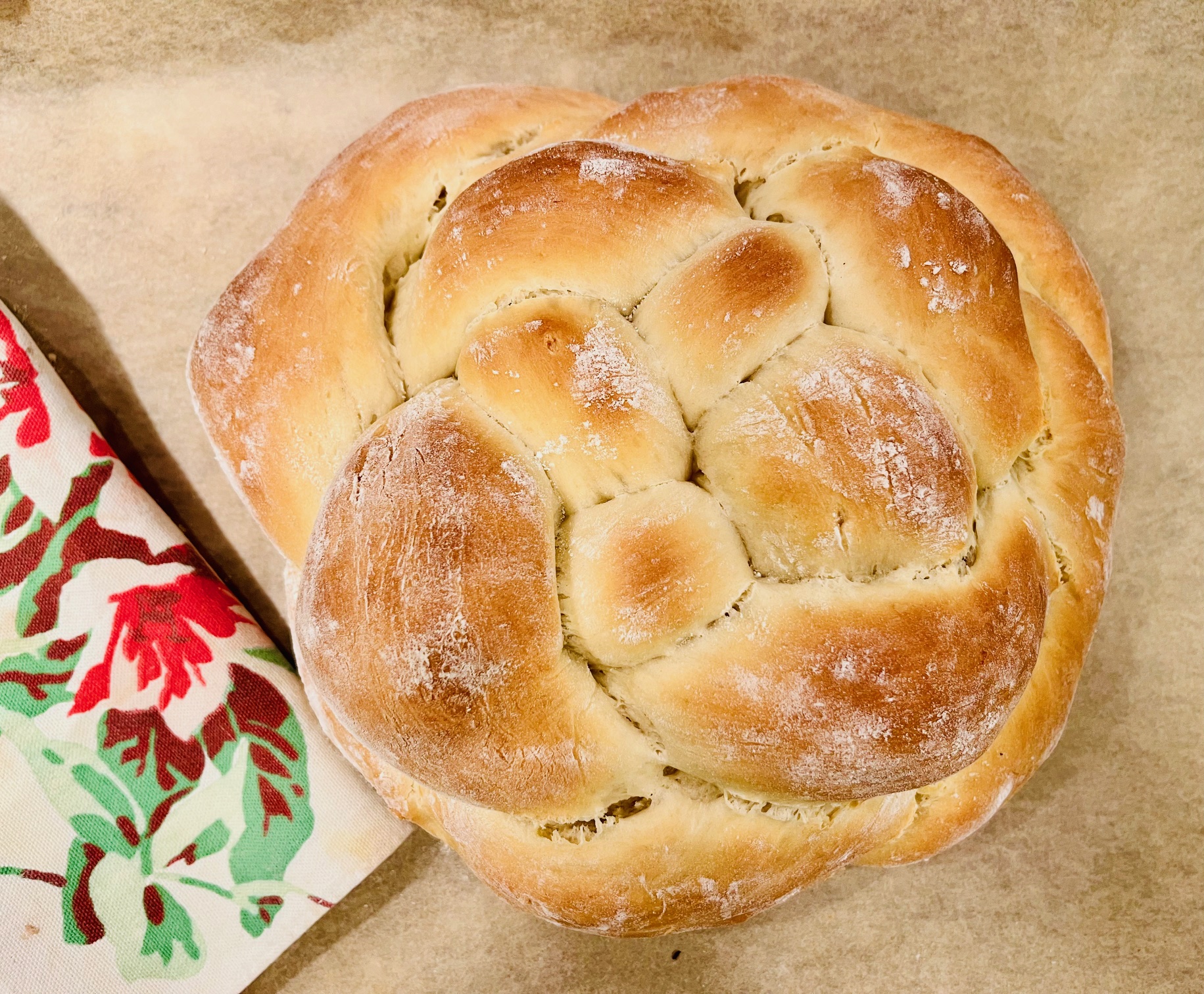
Spelt flour challot

I hadn’t baked with spelt flour before but decided to try to make challah with it for Rosh Hashana. I had read that the dough doesn’t hold its shape as well as white flour, so I made small round ones with the hope that they would keep stay in their form. I had also read that putting the bread in a round pan works too to prevent spreading.  I rarely eat white flour, so when I was in Haifa this past summer, I was excited to visit an incredible bakery (I think simply called The Bakery). They have a rack filled with dense, heavy, nutty-flavored breads, all for the purpose of being nutritious, healing foods. One had a special sign that it was for people with parkinsons. The owner was a non baker who started making breads at home for to heal his wife’s ailments. On a counter were half loaves and a large knife to cut samples, like being in a cheese shop.  They were delicious!
Continue reading

Rosh Hashana Recipes Roundup

I wanted to share a quick summary of many of my Rosh Hashana recipes. The first recipe I created for Neesh Noosh, more than ten years ago, was for Rosh Hashana. It’s my Garden of Eden dish which uses most of the symbolic foods of Rosh Hashana. It tasted great though the pomegranate seeds were pinkish/white and the photos over exposed but it was fun to create and helped to start me on this blogging journey. Click below to explore my Rosh Hashana recipes, including entrees, desserts and challah recipes! Continue reading

Vegan Challah

Vegan challah

Making vegan challah is really easy-there’s no need to make challah with eggs. And, making a circular braided challah to celebrate the new year is always fun. I wonder why I don’t do it more often? I cannot claim any creation of this recipe though, it’s all from this site. Scroll down for this full challah recipe plus my Rosh Hashana recipes including apple galette, mangold patties, black eyed peas stew, apple cake and more. Continue reading

Rosh Hashana: Mangold Patties

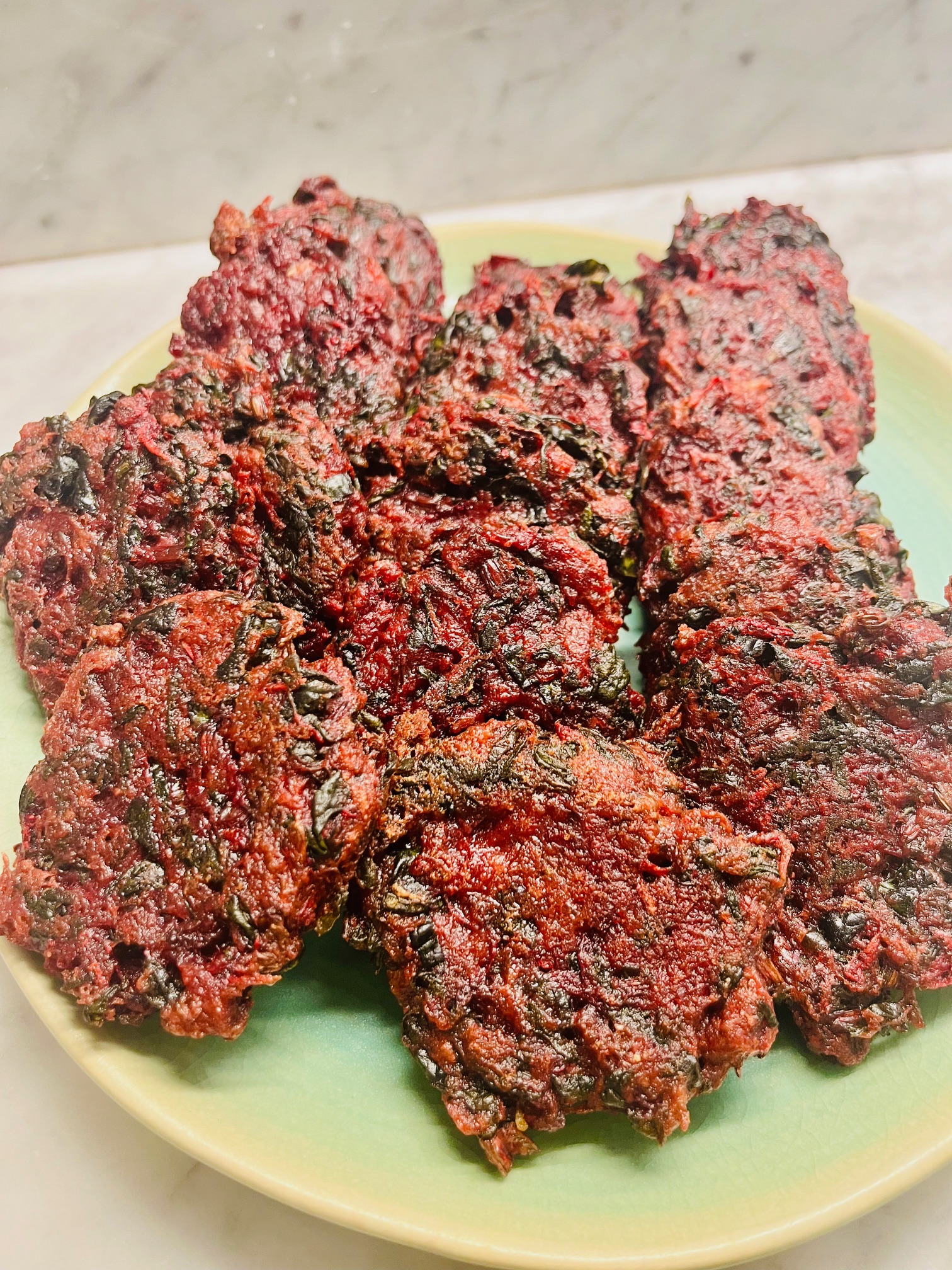
Mangold patties

These mangold patties are vegan variation on a traditional Sephardic Rosh Hashana recipe. Mangold is beets in Arabic. The main ingredient is beets-both the greens and the root, mixed with a bit of potato, kale, onion and spiced with baharat. It’s a very versatile dish that can be an appetizer or a main side. Beets are commonly eaten on Rosh Hashana because in Hebrew they are called “selek” which means to remove with the intention that our enemies will be removed in the new year. Scroll below for more of my Rosh Hashana recipes with other symbolic ingredients including apple cake, beet carpaccio, apple galette and black eyed peas. Shana Tova u’Metukah! Continue reading

Rosh Hashana: Black Eyed Peas

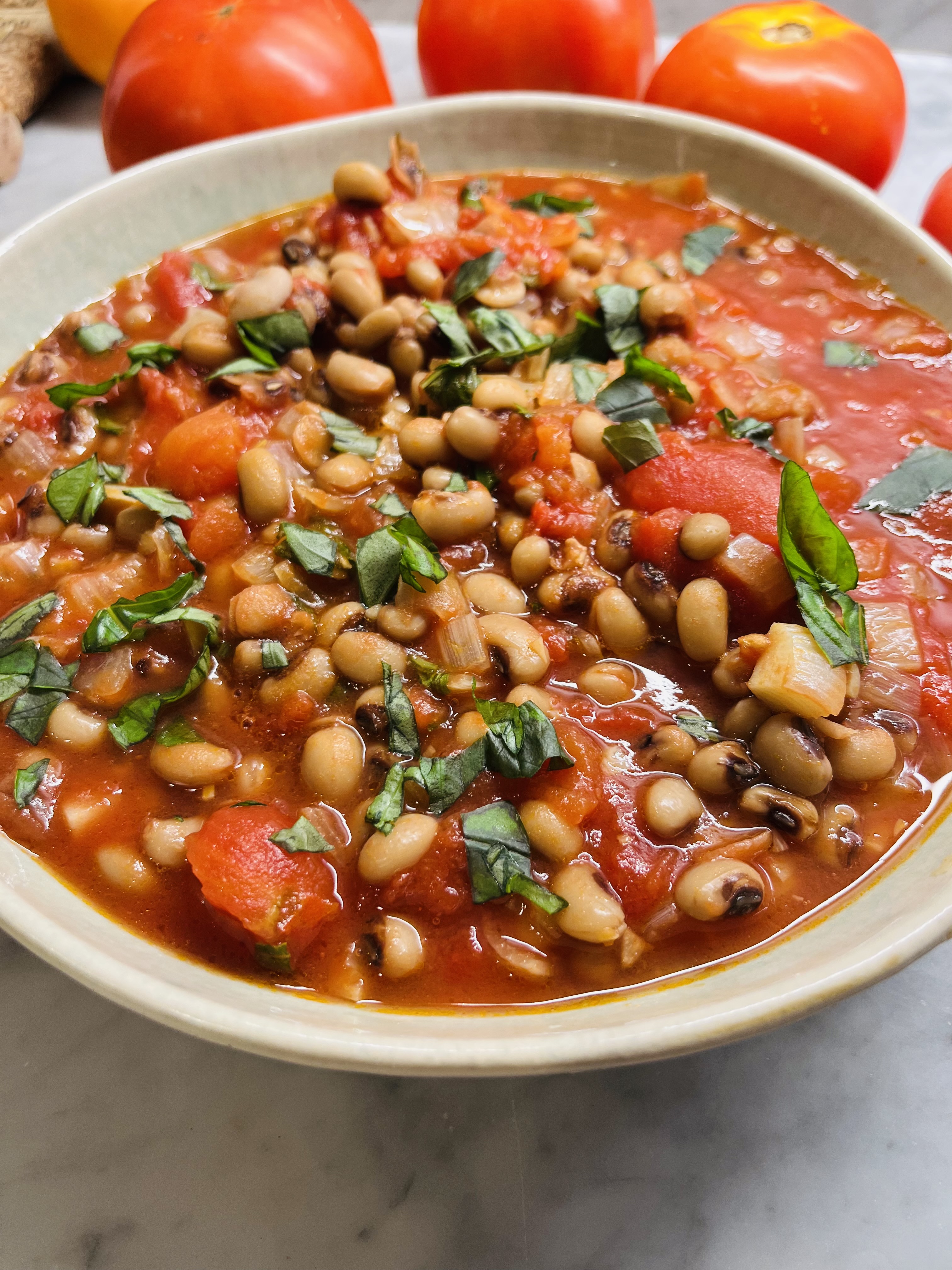
I recently read Michael Twitty’s latest fabulous book, Koshersoul, a personal and culinary exploration as a Black Jewish man.  Beautifully written with lots of recipes that trace the intersections and influences of African foods, African-American cuisine, Jewish Southern dishes, and Sephardic foods. One ingredient he wrote about was black eyed peas, commonly found in African, African-American and Sephardic and Mizrachi dishes. Black eyed peas are commonly eaten at Rosh Hashana as a symbol of a prosperous new year. Continue reading

Rosh Hashana: Beet Carpaccio

I love this beet carpaccio recipe! I first enjoyed it at a serene Shabbat dinner at my relative’s house during a glorious pre-Covid spring in Jerusalem. The flavors of the roasted beets are enough alone but topped with a lot of delicious ingredients that delicately balance both tangy and sweet flavors makes the beets the star of a rich, dramatic dish. It’s also a “one pan” dish that is simple to make. It’s perfect as an appetizer or side dish during a Rosh Hashana meal. Also, check the links below the recipe for more of my sweet and savory Rosh Hashana recipes. Shana tova! Continue reading

Roasted Carrots for Rosh Hashana

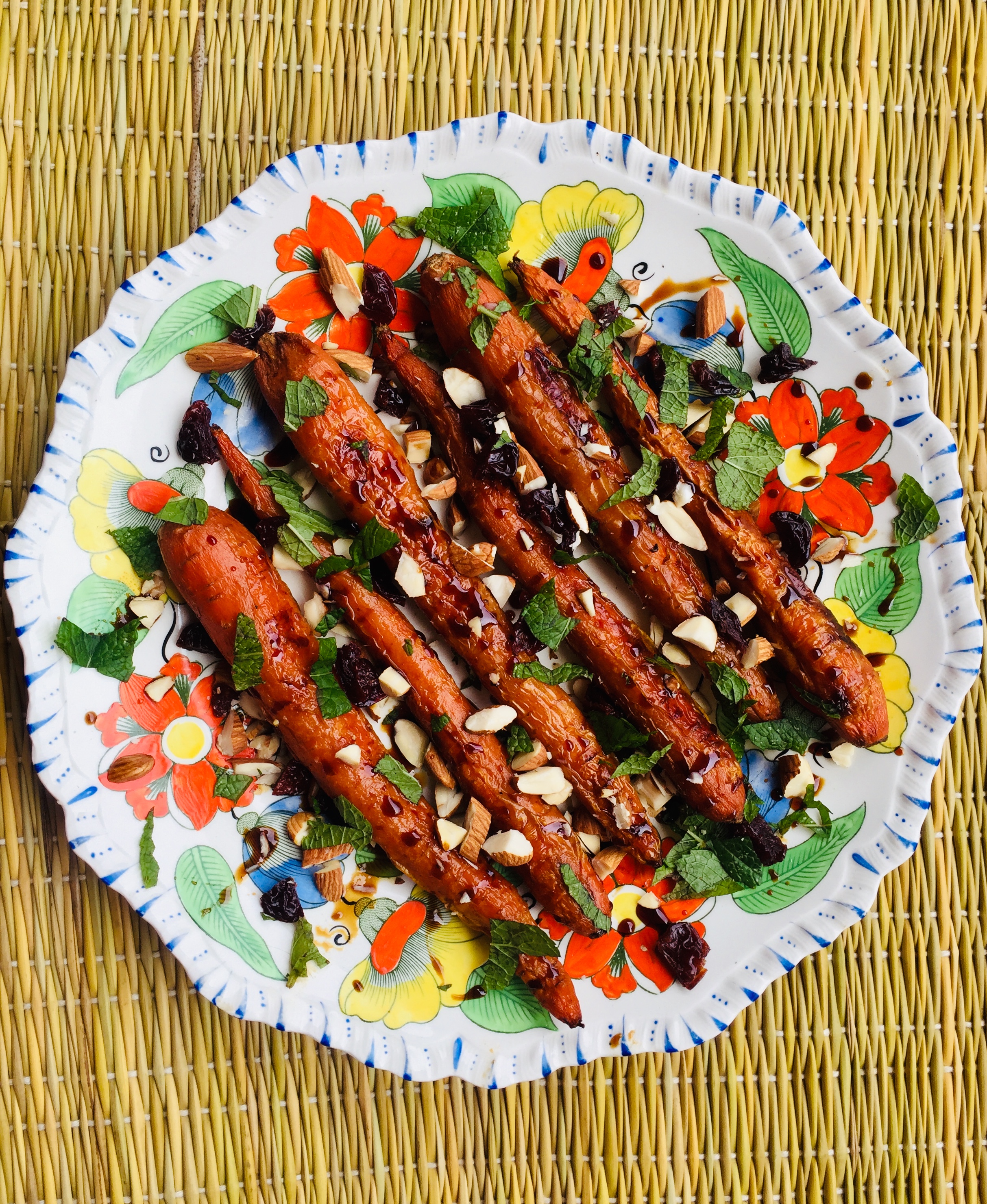
Rosh Hashana roasted carrots

As we prepare to celebrate Rosh Hashana to mark the birth of the world, it’s hard not to be confused and/or overwhelmed at times by the surreal world we are now living in. From COVID to wildfires to flooding to addressing systemic racism, our physical reality is forever altered.

The past six months have brought to the forefront of our daily lives both the devastating consequences of human actions that are the most un-God-like, but also the incredible, resilient, responses by humans to these crises.  When we wish people a healthy, good new year, I cannot think of a time when this has ever meant more than now, for all beings.

Continue reading

Covid/Chagim Care Packages

Roasted stone fruit

I love hosting people for meals and giving gifts for pretty much any opportunity possible. So, like so much else, this part of my life was upended by COVID, until I was inspired by my friend Jodi to give people “COVID care” packages. It’s like giving Purim mishloach manot, but all the time. Each one is just filled with homemade, individually wrapped treats and a note.  Living in a socially distant and digitized/online world now, these care packages are a way to connect with people and offer a little surprise that might shift an otherwise very routine COVID day. And, now, with high holidays soon approaching, the COVID care packages can be repurposed for the chagim. Continue reading

Rosh Hashana: Apple Galette & a Plant Forward New Year

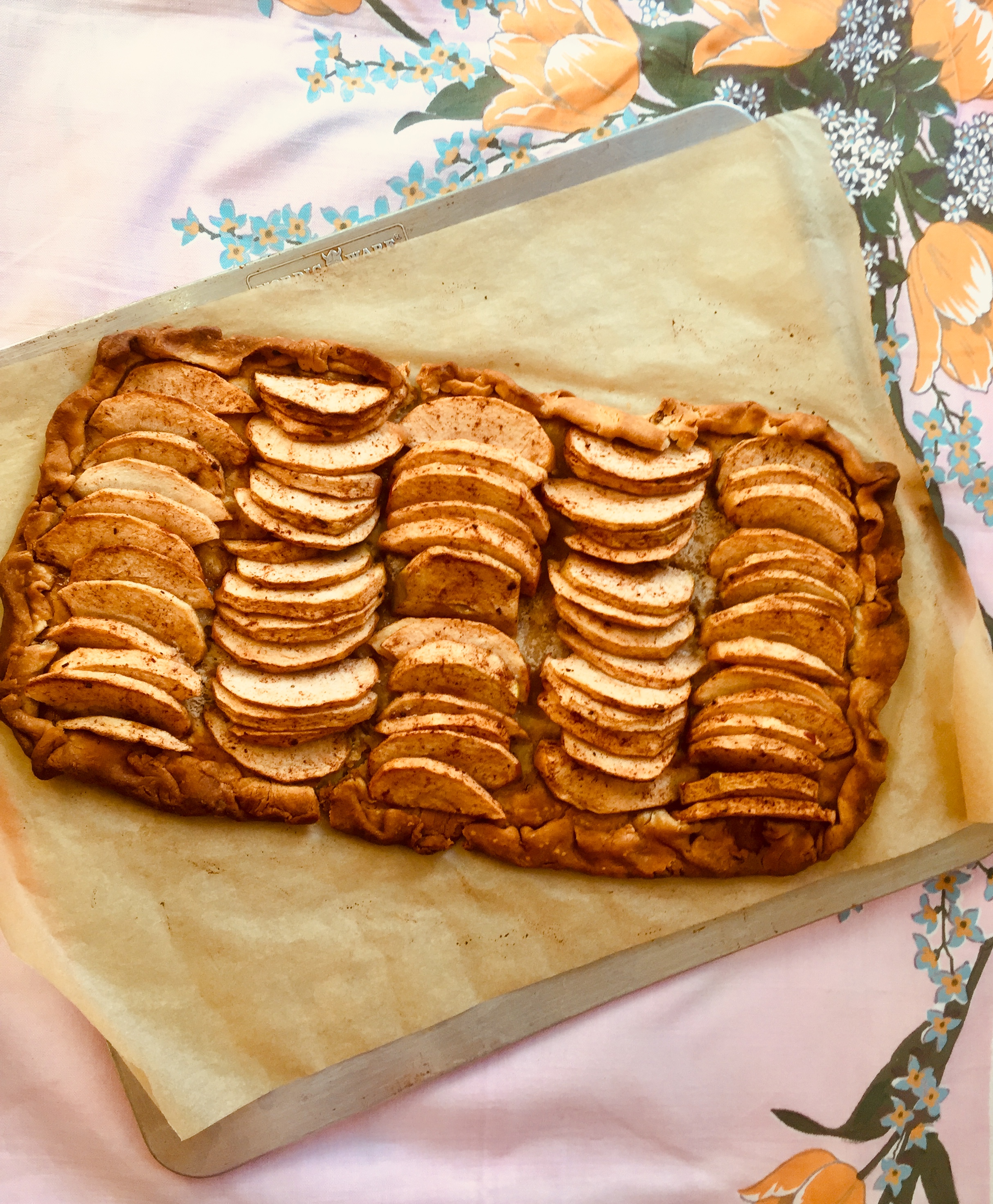
Apple galette

As we reflect on our own behaviors of the past year during the High Holidays, we must examine the impacts of our food choices. We are living in a world that is experiencing the effects of climate change (1/5 of all greenhouse gas emissions comes from livestock for meat and dairy consumption), the unprecedented burning of the Amazon for livestock grazing and food along with the horrific treatment and killing of farm animals for food (including for kosher slaughter), dwindling freshwater sources and water pollution.

Though these global issues can seem overwhelming and daunting, we are living also in an incredible moment where we have the resources to help to solve these problems, guided by Jewish values and ethics. Judaism challenges us to live to the highest standards, including how and what we eat; bringing more humane and environmentally sensitive plant-based foods to our tables will reduce climate emissions, cut water consumption and protect animals. Continue reading

Nina’s Apple Cake

Nina’s apple cake

This is the story of an apple cake. But not the ingredients or how to make it. It’s the story of its maker—someone who brought warmth and joy to my family’s home for Shabbat meals and holidays and who selflessly cared for so many people (including painstakingly preparing a beloved cake for voracious eaters!) despite a past that was far from sweet.

The baker of the famous apple cake is Nina Merrick, an 89-year-old resident of Silver Spring, Maryland. She and her husband, Leon, have been friends of my family’s ever since I first began to study with her to prepare for my bat mitzvah, a connection that came about thanks to her lifelong commitment to teaching Judaism. Continue reading