Cholent is truly a Jewish food. Jewish communities around the world prepare it specially for Shabbat, each with its own variation in name and ingredients. Also called dafina or skinha (Morocco) and hamin (Sephardic in general), the common thread of cholent recipes are that each is slowly cooked overnight so that it’s ready for Shabbat lunch. You cannot cook cholent quickly in a microwave or pressure cooker. It is a long process, and like Shabbat, it requires one to slow down from the rapid pace of weekday life. And no matter what goes into it, cholent is usually so hearty and filling that a Shabbat meal can be complete with it and nothing else. Continue reading
Tag Archives: Jewish
Simchat Torah: Stuffed Cabbage
Serving stuffed cabbage is a common dish for Simchat Torah. The recipe I share with you is from a dear friend–like a family member–who lives in Tel Aviv. I have had countless Shabbat and holiday meals at her home. Whether in the kitchen or dining room, the tables are always inevitably overflowing with dishes that she painstakingly prepared over a few days after spending hours picking out and discussing with the shopkeeper about the most beautiful produce at her local tiny fruit and vegetable market. Mindful of my plant-based diet, she not only would worry that I have enough to eat, but also creatively updated some of her meat dishes to be vegan. I have had this incredible stuffed cabbage dish at her home many times and every time she excitedly and proudly presents it on a platter to guests. I humbly present my best attempt to try to recreate her delicious recipe. Continue reading
Sukkot: Poverty and Ecology (and Stuffed Spaghetti Squash)
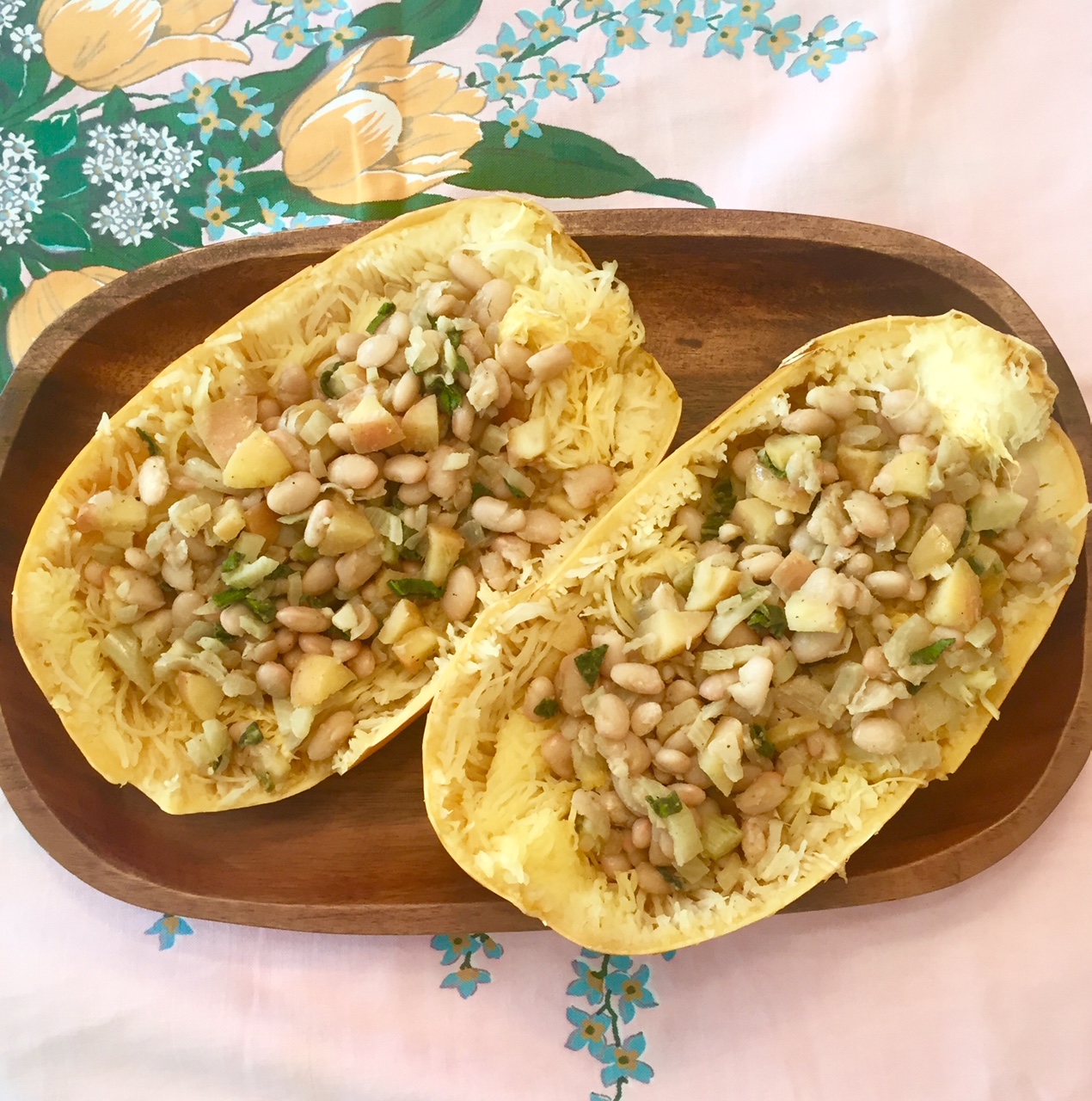
Sukkot is one of my favorite holidays for the obvious reasons: a harvest festival, the ultimate farm-to-table holiday filled with delicious meals eaten outside. I offer my recipe this year–inspired by the abundance of delicious apples and squash at farmers markets–with the note that the holiday, especially after Hurricane Florence, is a time for us to reflect upon and examine our fragility and impermanence, ourselves, our food systems and the world around us. Continue reading
Harissa and more Morocco
My Jewish-centric trip to Morocco began and ended in Casablanca, a sprawling coastal mega-city that is choked with traffic and filled with endless buildings of peeling white paint. The city is home to 1,000 Jews and an incredible 20 active synagogues, plus a cemetery and museum of Jewish history. I quickly felt comfortable in the city when I walked into the apartment building lobby of my Airbnb. I noticed a huge mezuzah affixed to an apartment near the entrance. With impeccable timing, the apartment door opened and two women walked out, saw my friend and me pointing at the mezuzah and warmly greeted us. Immediate Moroccan hospitality. Continue reading
Shabbat with Fassis
I took a whirlwind trip to Morocco just before Pesach that focused on visits to historic Jewish sites and spending time with remaining Jewish communities. The 2,000 year history of Jews in Morocco is evident everywhere–from Jewish areas of towns (mellahs), to cemeteries to synagogues–and I grappled with the simultaneous historical nature of the trip along with immersing myself in dwindling communities. I traveled with a friend who is fluent in French (a bonus since I last spoke French my first year of college and rarely anyone speaks English). It was a chaotic start to our trip with missed flights, lost luggage and a bad hotel. But, we set out to track down these people and places without a proper guide, which was not always an easy feat. Through a contact my friend had in Israel along with some rabbis she met on her flight, our paper trail began to unfold. Most importantly, we planned to spend Shabbat in Fes (Fassis is what people in Fes are called) and a connection to “the butcher” there ensured we were with the community. Continue reading
Rishikesh, Kitchari, and Passover
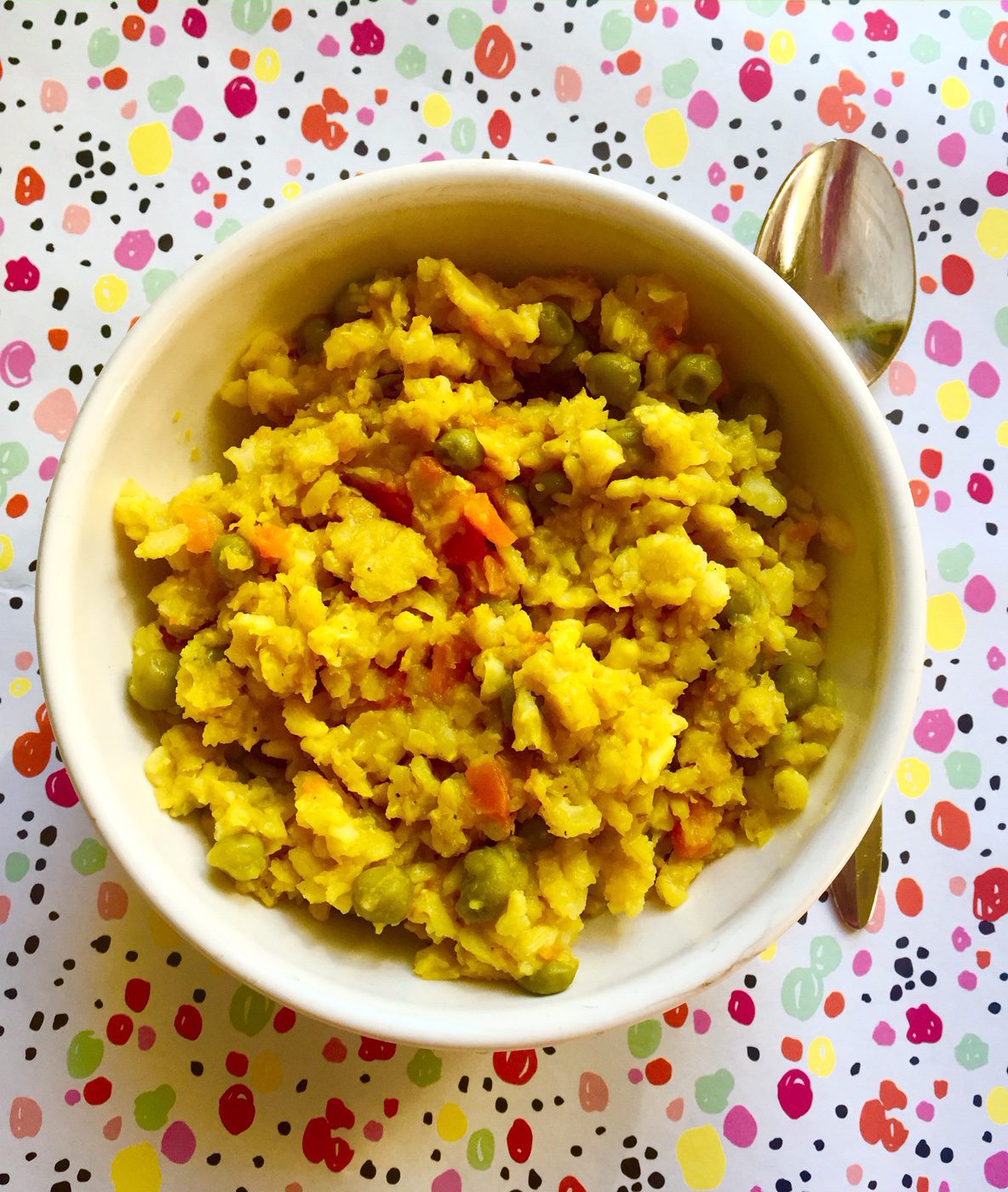
I spent a good chunk of last year in India. While there are still tiny remaining Indian Jewish communities (read my Fort Cochin post), there is now a transient Jewish population of tens of thousands of mostly post-army Israelis who generally travel through the country generally along a route known as the “Hummus Trail”. The trail is easy to figure out because in each location there are Chabads and other Jewish outreach organizations. For Passover, I joined the Hummus Trail community and went to Rishikesh. Continue reading
Vegan Sweet Noodle Kugel
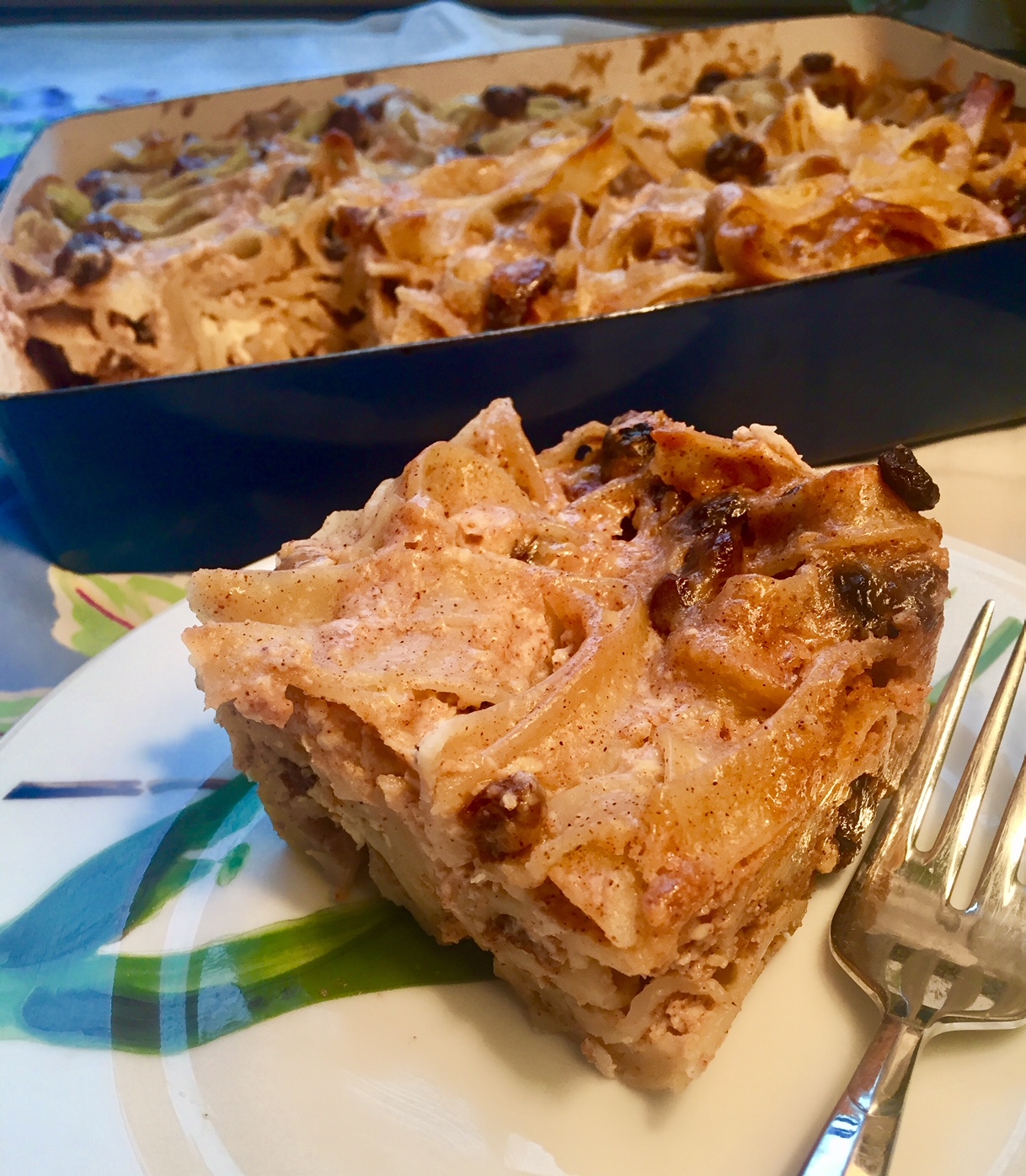
I’m going to be creating vegan updates to many traditional Ashkenazi dishes. Even though the recipes will be schmaltz and dairy-free, the dishes generally are still unhealthy because they are made with sugar, white refined flour, etc. Like their traditional counterparts, they definitely should be enjoyed sparingly, rather than part of your everyday menu.
This first recipe for sweet noodle kugel was originally posted on the Jewish Food Experience site. It’s an adaptation of my grandmother’s beloved sweet noodle kugel that she prepared so often. B’tayavon! Continue reading
A Roman Holiday and Shabbat
When I joined the Slow Food USA delegation trip to Terra Madre in Turin, Italy a few years ago, I added on a few bonus days in Rome. I couldn’t get enough out of the city, racing from one farmers market to the next, going on dizzying adventures to track down obscure shops and restaurants (not always successfully), walking miles in expansive city gardens and just soaking in the stunning ancient city’s incredible vibrant energy. And, I opted to crazily bike everywhere possible, braving the city’s notoriously chaotic traffic-clogged boulevards and narrow roads. By the time Shabbat arrived, I was exhausted. Continue reading
Jewish Values and Veganism
Many of my childhood food memories are of my grandmother and her holiday dishes. Standing by her side, she showed me how to roll the dough of mandelbrodt, properly fry a latke and make sweet noodle kugel. Conversations fluctuated between what would be cooked for the next meal and commentary about what was already bubbling on the stovetop or browning in the oven.
When I was ten years old, I told my parents that I did not want to eat animals and would henceforth be a vegetarian. Then, a few years ago, I decided to become vegan after I learned that the animals raised for egg and dairy products—even from local farmers—were eventually slaughtered when they stopped “producing.” With a vegan diet, out went most of my grandmother’s cooking. Continue reading
Septimania and Turron
Before going to Catalonia, Septimania and turron were two words I’d never heard before. Septimania– a Jewish kingdom? Yes, it’s true. I first learned about it while visiting some family who live in a tiny village on the French side of Catalonia (population 100. And, no they actually aren’t the only Jewish people in the area). The village is nestled at the base Mt. Canigou, a revered peak to Catalans. Continue reading