Devarim: Towards the Promised Land

Devarim: walnuts, fruit and honey

Devarim: walnuts, fruit and honey

We enter the fifth and final book of the Torah, Devarim (Deuteronomy).  In this week’s Torah portion, also called Devarim, the Israelites are on the precipice of entering the Promised Land. Moses begins to recount the laws, teachings and events of the Israelites 40 years in the wilderness.

We are–individually and collectively–on journeys to the Promised Land. It’s our spiritual journeys. And, it’s about our responsibilities to our world by pursuing tzedek (justice) and tikkun olam (repairing the world).  And though, like Moses, we won’t necessarily reach the Promised Land, we are obligated to act for ourselves and future generations. It is taught, “It is not your responsibility to finish the work [of perfecting the world], but you are not free to desist from it either” (Ethics of the Fathers 2:16).

Continue reading

Matot-Massei: Concentric Circles

Matot-Massei: Roasted onions

Matot-Massei: Roasted onions

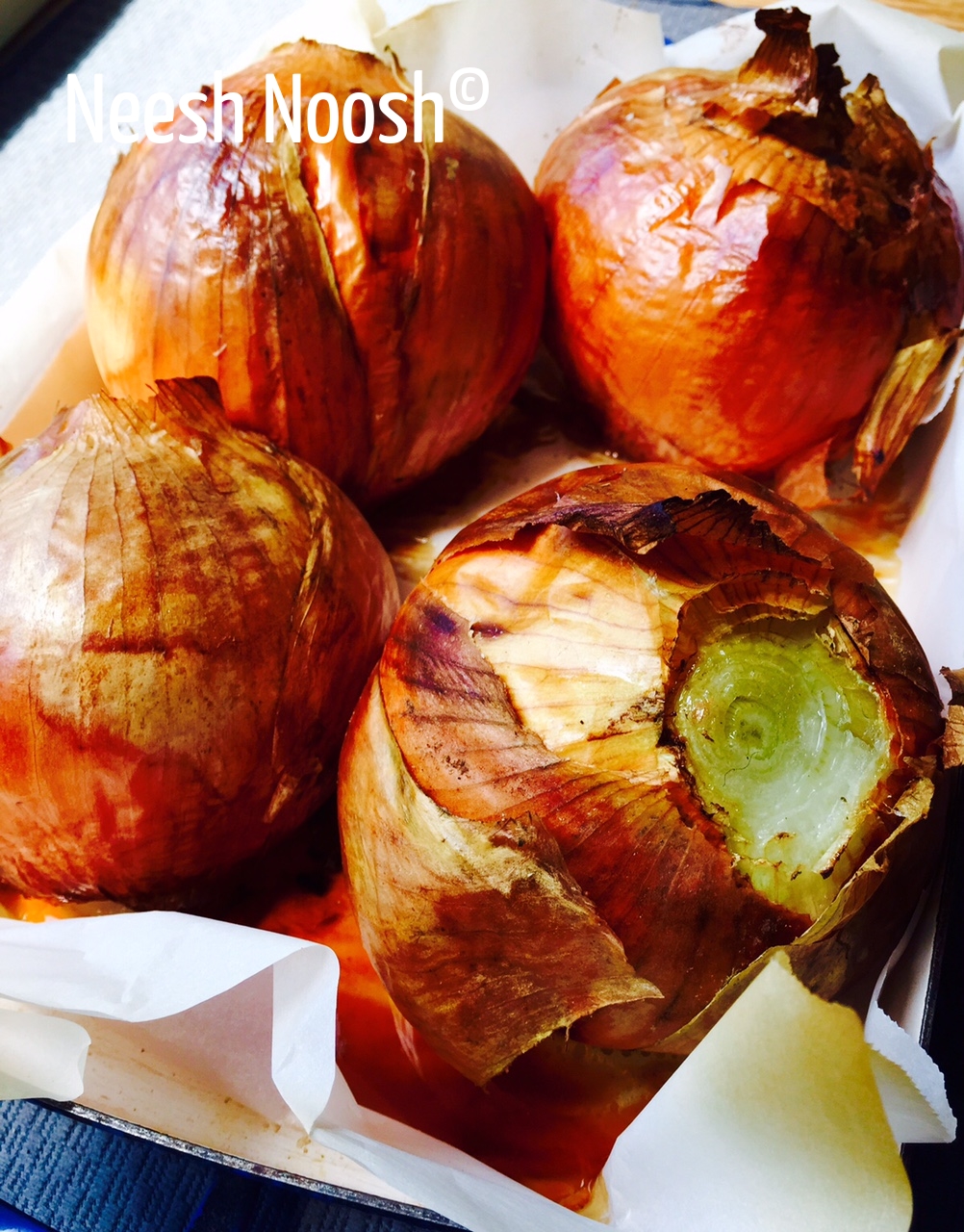
I received a basket of enormous, homegrown onions from a family friend. Layers of thick dirt muted the rich golden tones of the onions. Each one had just been picked and a mass of dried out, dusty stalks, like wild hair, was sprouting from the bulbs.  I wasn’t sure what to do with so many onions until I read this week’s parsha, Matot-Massei.  I prepared a simple roasted onions side dish. These concentric circles of onion are delicate, rich in flavor and easy to prepare. This week I offer many different thoughts about the onions and how the dish relates to themes in the parsha. Continue reading

Korach: From Rebellious to Sacred

Korach: Pancakes with strawberry compote

Korach: Pancakes with strawberry compote

In this week’s Torah portion, we read about rebellious Israelites, led by Korach. While his complaints about the status of Moses and Aaron might seem like the words of an early democratic activist, his intentions were actually self-serving. He is “the arch-demagogue, lusting for power to inflate his own prominence, not to serve the people” (Etz Hayim, p. 860). He led a group of Israelites in opposition to not only Moses and Aaron but “that of Torah, and ultimately, God.” (Etz Hayim, p. 860). Rabbi Samuel Barth notes, “The sin of Korah was in thinking of himself as “outside the community”; he betook himself and his followers from being part of the People of Israel, and they became a faction, catalysts for further factionalization.”

Rabbi Moshe Bryski, on Chabad.org writes that Korach lived his life yearning for a different one, jealous of others. He comments that “A person who sees the essence of life as serving the will of His Creator does not expend useless energy craving places where the grass is greener. He finds meaning, purpose, joy and fulfillment in the place where the grass is greenest of all: his own.”

Continue reading

Shelach: Fear or Trust?

FullSizeRender(141)

Shelach: Milk and honey rice pudding

In this week’s parsha, Shelach, Moses sends the 12 spies to scout out the land of Canaan. Upon their return, they recount that the land does flow with milk and honey. But, they also were fearful of its inhabitants, explaining that they cannot conquer them. They tell Moses that it is a land filled with people that “devours its settlers. All the people we saw in it are men of great size. . . and we looked like grasshoppers to ourselves, and so we must have looked to them” (13: 32-33).

The Israelites are crushed and wish that they had never left their enslaved lives in Egypt. Only Caleb and Joshua are unwavering in their faith that God can deliver them to the land. God is enraged by their lack of faith, fear: How long will this people provoke Me? How much longer will they not believe in Me after all the signs I have performed in their midst?(14:11). God declares that none of this generation of Israelites (except Caleb and Joshua’s families) will enter the land.

Continue reading

Naso: Blessings and Unity

Naso: Ful Medames

Naso: Ful Medames

In this week’s parsha, Naso, God says to Moses:
Speak to Aaron and his sons: Thus shall you bless the people of Israel. Say to them:
The Lord bless you and protect you!
The Lord deal kindly and graciously with you!
The Lord bestow His favor upon you and grant you peace!
Thus they shall link My name with the people of Israel, and I will bless them. (6:23-27)

Continue reading

Shavuot

Borough Market bourekas

Borough Market bourekas

In the Torah, it is written about the Shavuot offering: “you shall take of the first of all the fruit of the ground, which you will bring from your land, which the Lord, your God, is giving you. And you shall put [them] into a basket and go to the place which the Lord, your God, will choose to have His Name dwell there (Deuteronomy 26:2). Dates, figs, grapes, olives, pomegranates, and wheat were the first fruits of Shavuot.

Continue reading

Tazria-Metzora: Purification

Tazria-Metzora orecchiette pasta

Tazria-Metzora orecchiette pasta

This week’s parsha Tazria-Metzora, offers a detailed explanation of purification steps for someone who is ritually impure (tumah). It includes the following instruction: And he shall slaughter the guilt offering lamb, and the kohen shall take some of the blood of the guilt offering’s and place it on the cartilage of the right ear of the person being cleansed, on the thumb of his right hand, and on the big toe of his right foot (14:25). Tumah is not bad. As commentary in Etz Hayyim explains: “We can see the notion of tumah, then, as growing out of a sense of reverence for the miraculous nature of birth, the awesome power of death, and the mysteries of illness and recuperation” (p. 649).

Continue reading

Yom Kippur: From Fasting to Juicing

Magical Juice

The anxieties of abstaining from food and water on Yom Kippur (and enduring an expected heat wave in Los Angeles this weekend) start to dance around my head months before the actual holiday. As I try to do the important work of teshuva, I keep thinking: How am I going to prepare for and survive the fast?! How many late summer conversations do I have with my coffee drinking friends about their preferred caffeine withdrawal techniques?

Needless to say, I probably don’t need to remind anyone of the billion plus people worldwide who experience many days like this from lack of access to or fresh water each week, month, year.  Or the 46.5 million Americans who are hungry (21 million children, 7 million seniors). Unlike the daily struggles billions of people endure, this is one day for Jews without food or water.

And even though my mind admittedly will at times be distracted by a visual loop equivalent to the Food Network, Yom Kippur is really a gift. It’s an opportunity to try to move into a deep spiritual realm that is beyond our physical dimensions. Continue reading