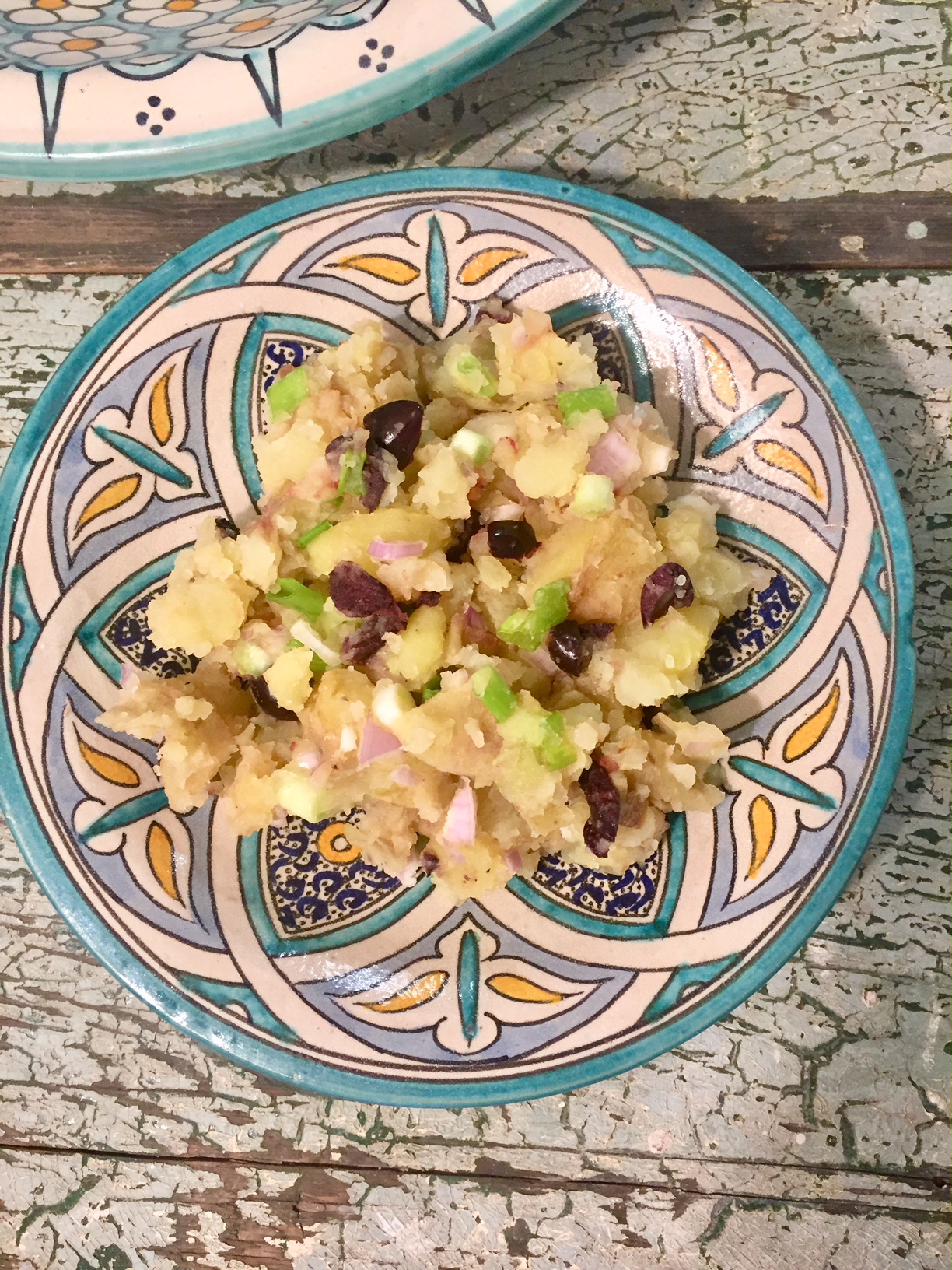
I took a whirlwind trip to Morocco just before Pesach that focused on visits to historic Jewish sites and spending time with remaining Jewish communities. The 2,000 year history of Jews in Morocco is evident everywhere–from Jewish areas of towns (mellahs), to cemeteries to synagogues–and I grappled with the simultaneous historical nature of the trip along with immersing myself in dwindling communities. I traveled with a friend who is fluent in French (a bonus since I last spoke French my first year of college and rarely anyone speaks English). It was a chaotic start to our trip with missed flights, lost luggage and a bad hotel. But, we set out to track down these people and places without a proper guide, which was not always an easy feat. Through a contact my friend had in Israel along with some rabbis she met on her flight, our paper trail began to unfold. Most importantly, we planned to spend Shabbat in Fes (Fassis is what people in Fes are called) and a connection to “the butcher” there ensured we were with the community. Continue reading
Tag Archives: Jewish
Rishikesh, Kitchari, and Passover
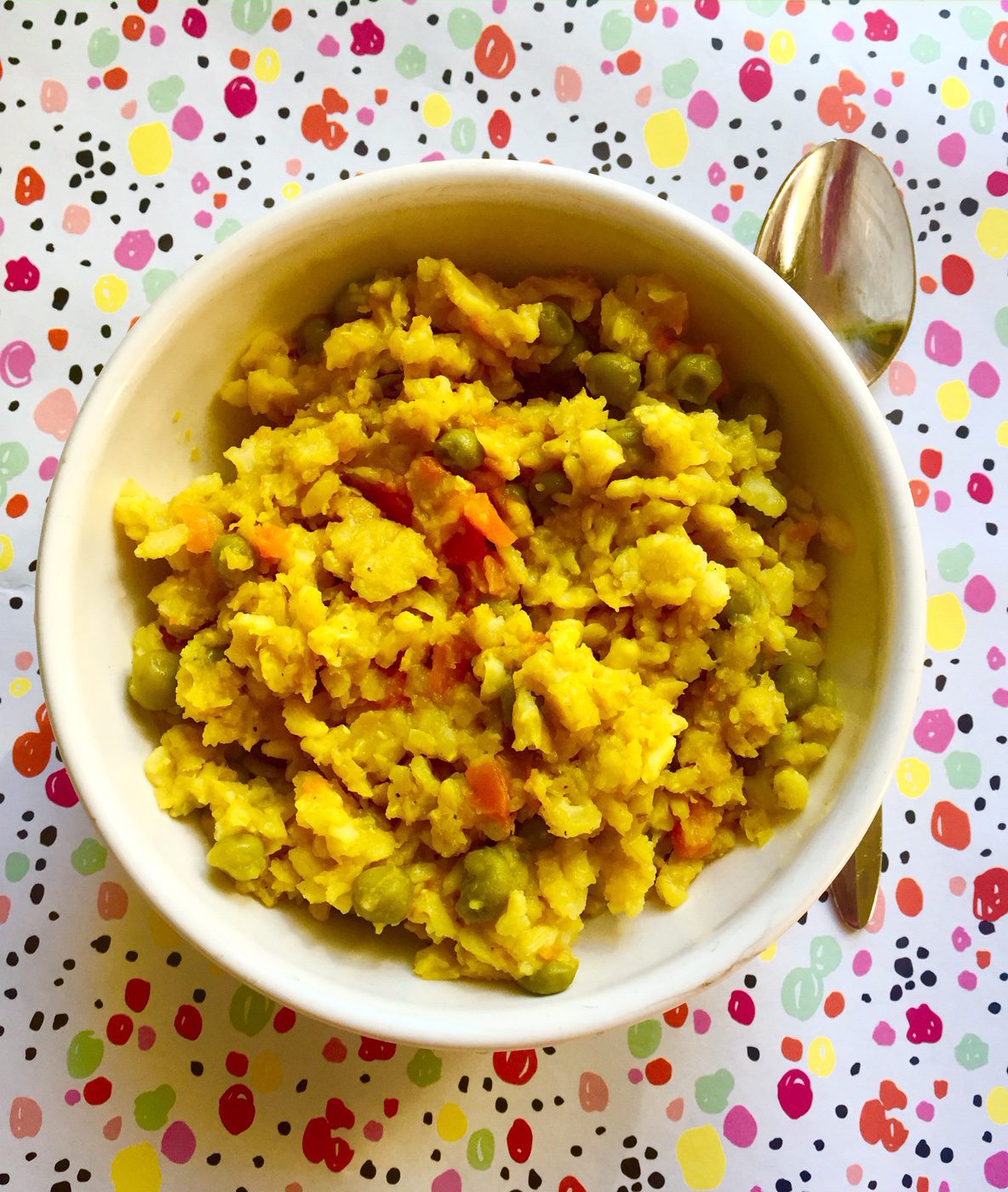
I spent a good chunk of last year in India. While there are still tiny remaining Indian Jewish communities (read my Fort Cochin post), there is now a transient Jewish population of tens of thousands of mostly post-army Israelis who generally travel through the country generally along a route known as the “Hummus Trail”. The trail is easy to figure out because in each location there are Chabads and other Jewish outreach organizations. For Passover, I joined the Hummus Trail community and went to Rishikesh. Continue reading
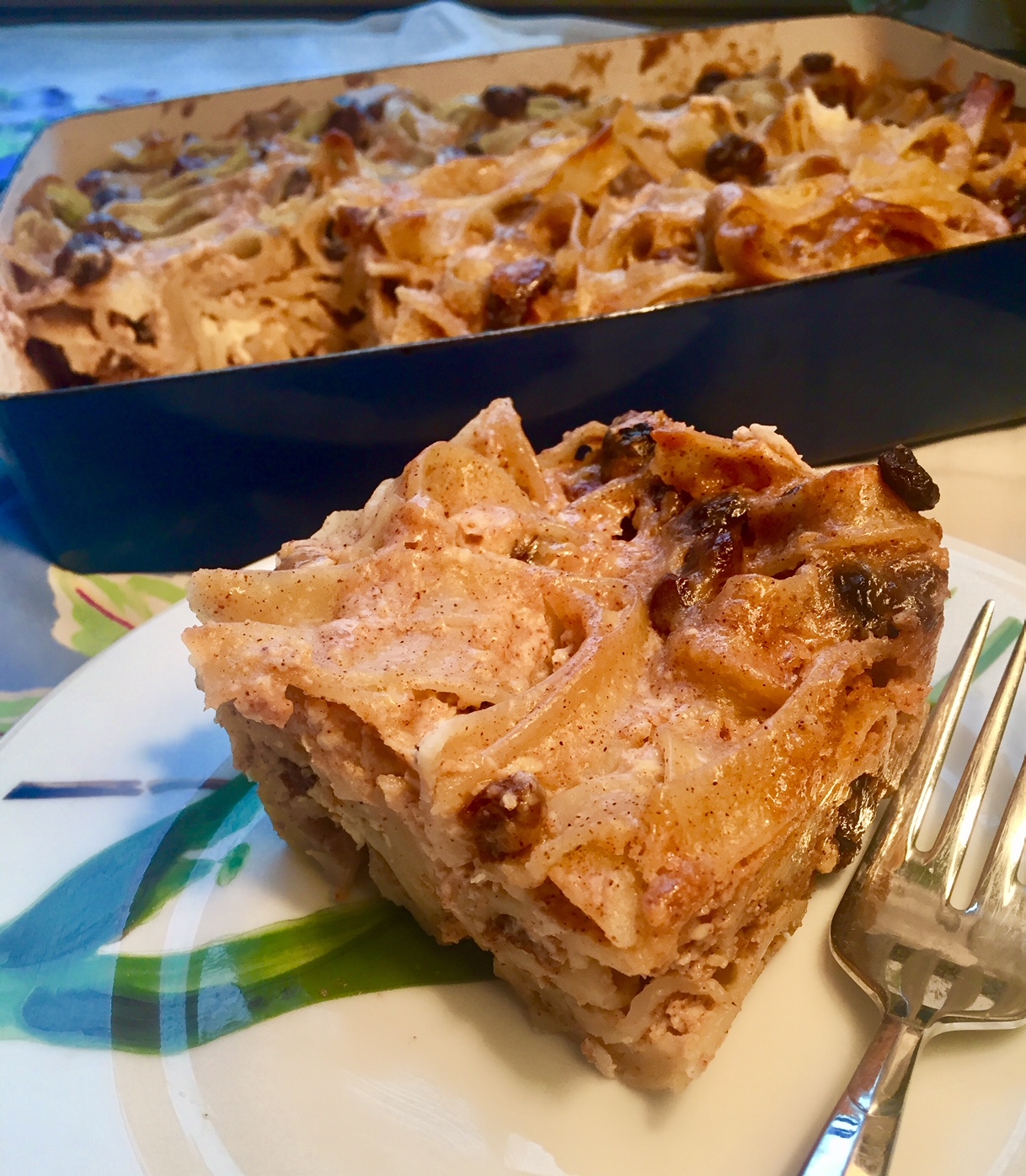
Vegan Sweet Noodle Kugel
I’m going to be creating vegan updates to many traditional Ashkenazi dishes. Even though the recipes will be schmaltz and dairy-free, the dishes generally are still unhealthy because they are made with sugar, white refined flour, etc. Like their traditional counterparts, they definitely should be enjoyed sparingly, rather than part of your everyday menu.
This first recipe for sweet noodle kugel was originally posted on the Jewish Food Experience site. It’s an adaptation of my grandmother’s beloved sweet noodle kugel that she prepared so often. B’tayavon! Continue reading
A Roman Holiday and Shabbat
When I joined the Slow Food USA delegation trip to Terra Madre in Turin, Italy a few years ago, I added on a few bonus days in Rome. I couldn’t get enough out of the city, racing from one farmers market to the next, going on dizzying adventures to track down obscure shops and restaurants (not always successfully), walking miles in expansive city gardens and just soaking in the stunning ancient city’s incredible vibrant energy. And, I opted to crazily bike everywhere possible, braving the city’s notoriously chaotic traffic-clogged boulevards and narrow roads. By the time Shabbat arrived, I was exhausted. Continue reading
Jewish Values and Veganism
Many of my childhood food memories are of my grandmother and her holiday dishes. Standing by her side, she showed me how to roll the dough of mandelbrodt, properly fry a latke and make sweet noodle kugel. Conversations fluctuated between what would be cooked for the next meal and commentary about what was already bubbling on the stovetop or browning in the oven.
When I was ten years old, I told my parents that I did not want to eat animals and would henceforth be a vegetarian. Then, a few years ago, I decided to become vegan after I learned that the animals raised for egg and dairy products—even from local farmers—were eventually slaughtered when they stopped “producing.” With a vegan diet, out went most of my grandmother’s cooking. Continue reading
Septimania and Turron
Before going to Catalonia, Septimania and turron were two words I’d never heard before. Septimania– a Jewish kingdom? Yes, it’s true. I first learned about it while visiting some family who live in a tiny village on the French side of Catalonia (population 100. And, no they actually aren’t the only Jewish people in the area). The village is nestled at the base Mt. Canigou, a revered peak to Catalans. Continue reading
Catalonia and the Kabbalists
I spent some time following in the footsteps of Kabbalists who lived in Catalonia, an area that straddles parts of the coastal and southern mountain areas of now Spain and France, and includes the beautiful, eclectic city of Barcelona. The strong sense of Catalan pride and identity and the excitement over the then- impending vote for independence from Spain was very much evident in my conversations with people, as were all of the “Si” graffiti and banners everywhere I visited.
In the backdrop of the current political situation, much of my time there was spent wandering the slippery, winding stone streets of former Jewish ghettos in medieval towns to visit mikvahs and synagogues, trying to piece together what life was like for Jews who had a flourishing society there until their expulsion in 1492. The small city of Girona was the epicenter of Kabbalists and the home of Rabbi Moses ben Nachman (the Ramban) who eventually was the chief rabbi of Catalonia.
Portugal and Simchat Torah
I had an unexpected detour in my travels last year and ended up in Portugal, a place I hadn’t planned to visit and certainly not during Jewish holidays. Portugal had initially been a refuge for Jews fleeing Spain during the Inquisition but it subsequently followed in Spain’s footsteps, expelling or forcing the conversion of its Jewish populations. It was surreal at times to return to the country which now has a Jewish population of 1500 people now, spread amongst a few cities and towns. I spent time in the stunning Algarve region on the southern coast, including the town of Faro, where previously there had been a Jewish population, though the cemetery and museum were closed when I tried to visit. On the other hand, there’s a small but vibrant community in Lisbon, where I spent Simchat Torah. It is a spectacular, dramatic mountainous coastal city filled with the most beautiful buildings whose exteriors are covered in the most colorful tiles. It is quickly becoming an international cultural and technology destination and I predict it to become “the next Berlin.” Continue reading
Sukkot: Stuffed Zucchinis
This is a recipe that I originally wrote for the Borough Market blog and wanted to share with you. Enjoying seasonal foods at meals in a sukkah makes Sukkot the ultimate “farm to table” holiday. The holiday foods are frequently stuffed, to symbolize the harvest bounty. The dish I prepared is quinoa stuffed zucchinis, sweetened with dates, figs and honey, a few of the “seven species” of Israel.
Chag Sameach! Continue reading
Torah, Food, and Climate Change
This weekend begins the “Earth Week” starting with the March for Science and culminating next weekend with the People’s Climate March. Both will be held in Washington, DC, with satellite marches across the nation and around the globe. We are living in a perilous time: we’ve already exceed the greenhouse gas emissions goal of 350 ppm, each year tops the previous one as “the hottest on record” and efforts are underway to gut the Environmental Protection Agency. The effects of climate change, including drought, floods and increased temperatures wreak havoc on crops, threatening our food supplies. We can make a significant reduction in our climate emissions through our food choices (9% of all greenhouse gas emissions in the US come from agriculture). Torah teaches us that we are God’s partner in protecting creation, bal taschit (do not destroy/waste) is a central teaching, and our calendar follows the agricultural cycle. “The LORD God took the man and placed him in the garden of Eden, to till it and tend it” (Genesis 2:15). The following tips to reduce one’s carbon emissions through food choices can be easily be done at home, schools, and shuls (and details about Jewish involvement in the People’s Climate Shabbat/March and other resources).