Vayetzei: Sunset to Sunrise

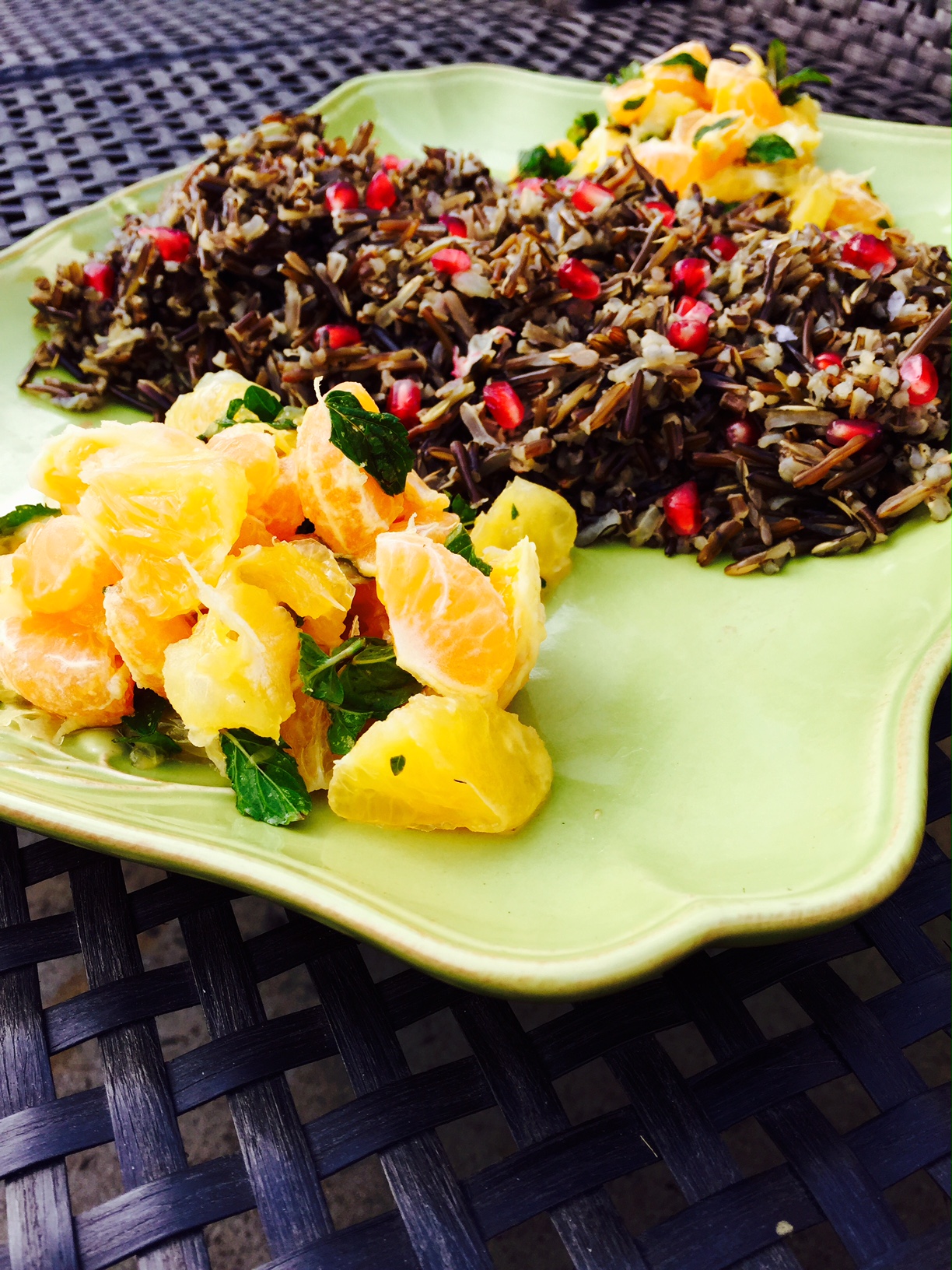
Vayetzei dish

Vayetzei dish

In Vayetzei, we read that Jacob leaves Beer-sheva at sunset to travel to Laban’s house. Jacob is at Laban’s house for 20 years, during which time he faces many challenges and uncertainties that shroud his life in darkness. After the 20 years there, he leaves Laban’s house at sunrise.

The Etz Hayim commentary describes “the 20 years at Laban’s house as a ‘dark night for the soul,’ years spent struggling with the dark forces represented by Laban’s treachery and Jacob’s confronting his own attracting to deceit” (p. 166).

However, despite the challenges and darkness that Jacob deals with in the 20 years, he also connects with God.  Etz Hayim continues, “when the Sages attribute to Jacob the institution of the evening prayer (Ma’ariv), they may be crediting him as the first person able to find God in the midst of darkness” (p. 166)
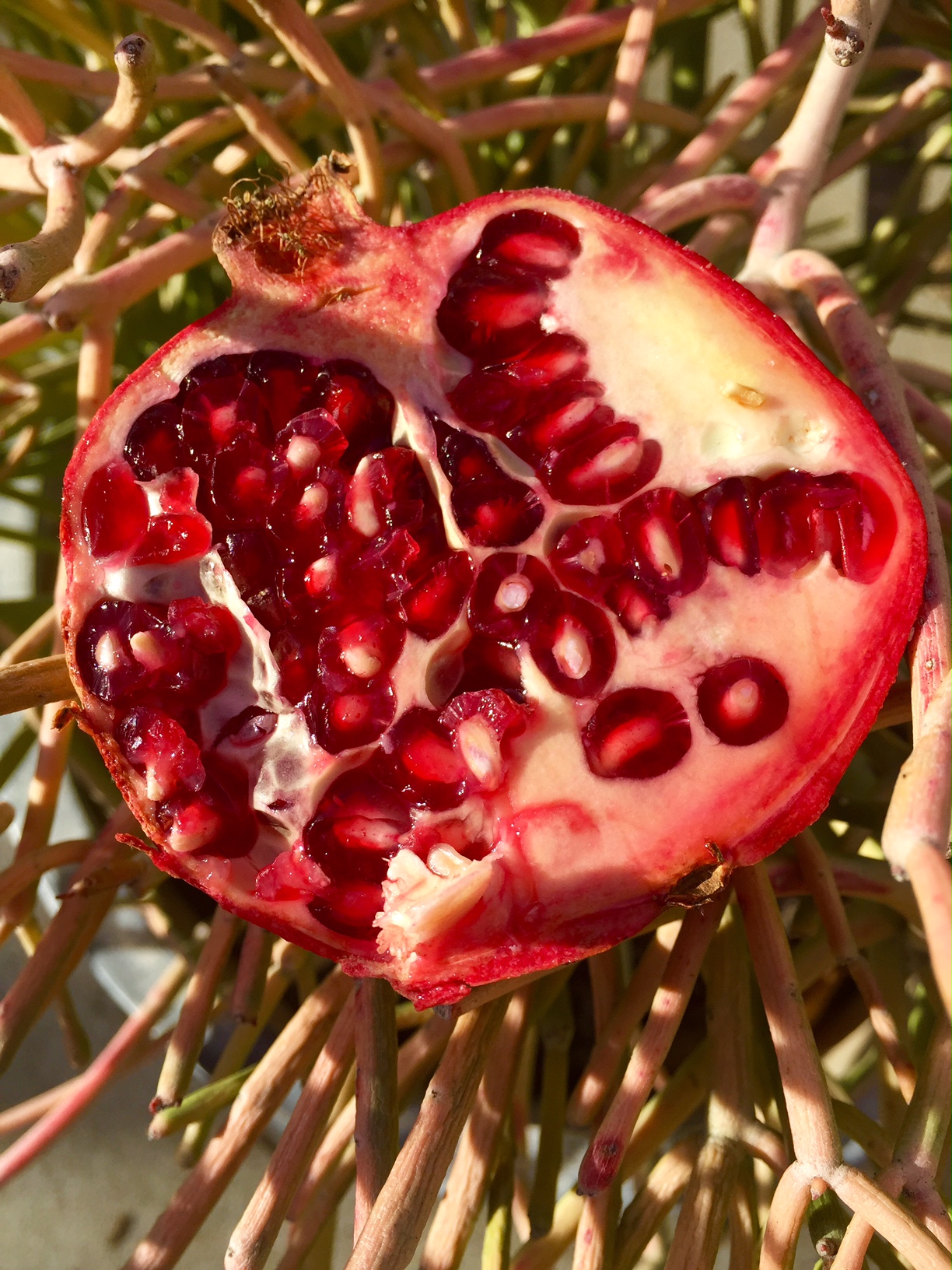
La Cienega farmers market. Pomegranate

La Cienega farmers market. Pomegranate

Jacob’s time of darkness was an opportunity for him to find God. And, as  Yael Shy comments, “Jacob leaves us with the challenge of recognizing our encounters with God in all God’s forms.” There are many dark and challenging parts of our lives and society. Our food system is one. How is it possible that the wealthiest nation in the world has 45.3 million citizens living in poverty and 49.1 million hungry people?  In addition, for 29 million Americans who live in low-income areas, the nearest supermarket is more than a mile away. When someone is poor, without transportation and/or living in a low-income area without a supermarket, it significantly hampers one’s ability to eat nutritious food. Despite, this dark aspect of our society, there are countless individuals who recognize this challenge and are re-imagining our food system.

Continue reading

Toldot: Negotiating for Lentil Stew and More

Liar's Lentil Stew

Liar’s Lentil Stew

Toldot shows us the darker dynamics that can occur between loved ones, especially when one negotiates in less-than-transparent ways. Rebecca and Jacob’s prayers for a child are answered with the birth of her non-identical twin boys, Esau and Jacob.

A famished Esau encounters his brother Jacob enjoying lentil stew. Esau pleads with him to give him some stew in exchange for his birthright, to which Jacob agrees.

We are living in an era now where a different type of deceit happens for people’s birthright–farm land–through land grabs. There’s a lot at stake. The global food economy is a $6 trillion/year system. “The world produces more than 1 1/2 times enough food to feed everyone on the planet.” 

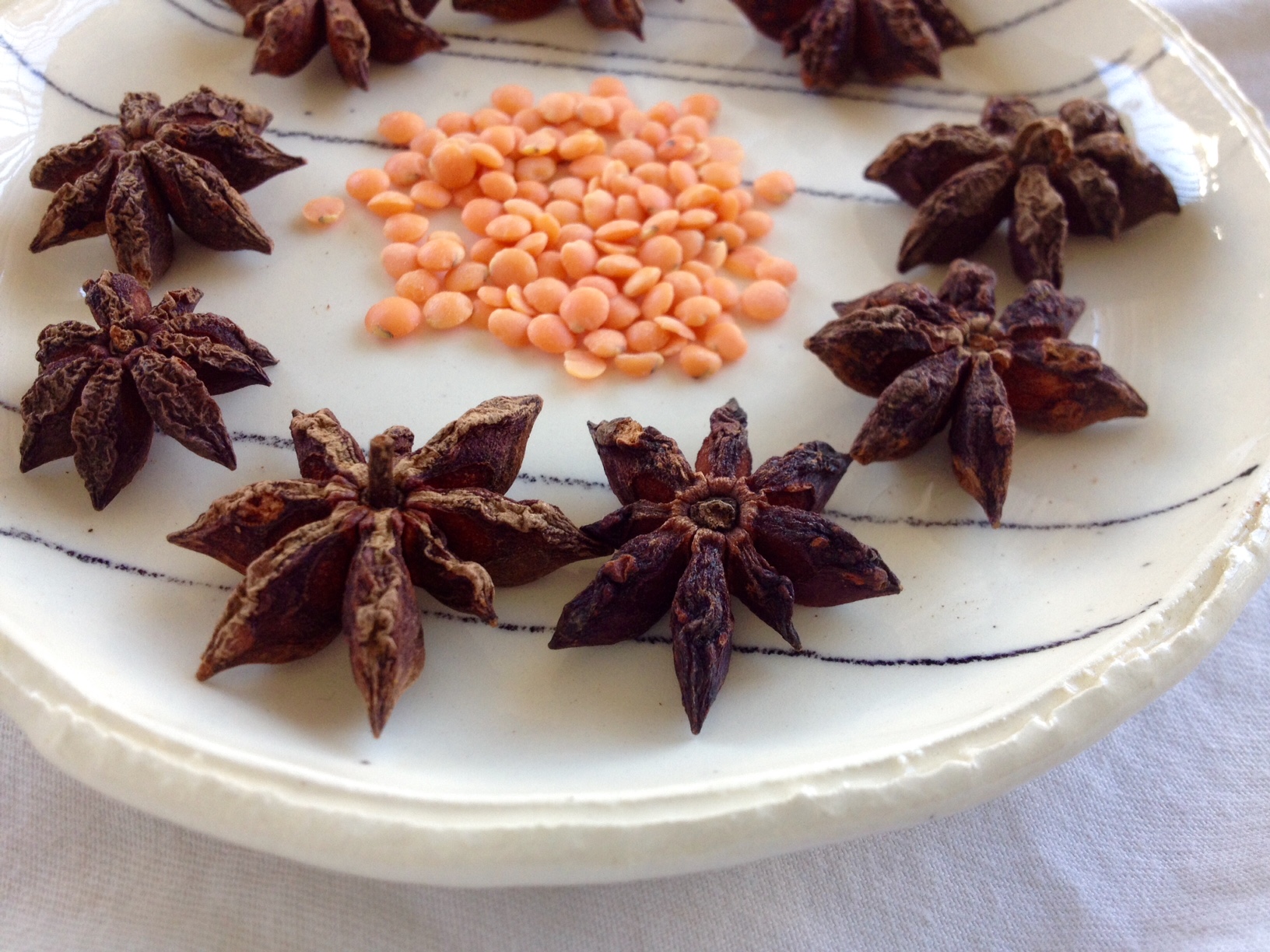
Star anise and red lentils.

Star anise and red lentils.

Seventy percent of our world’s food is grown by family farmers on 25% of the world’s farmland. Despite this being the UN declared, Year of the Family Farmer, land grabs continue to  happen around the world, including here in the United States.  When small farmers enter into negotiations with large corporations they are doubly disadvantaged. They don’t always understand what they are transacting, and they are sometimes made to believe that selling their birthright is the only option open to them. Similarly, Esau didn’t understand the value of his birthright and Jacob had leverage over his brother. When farmers today realize they lost their birthrights, they are upset like Esau. Continue reading

Chayei Sarah: Life and Death

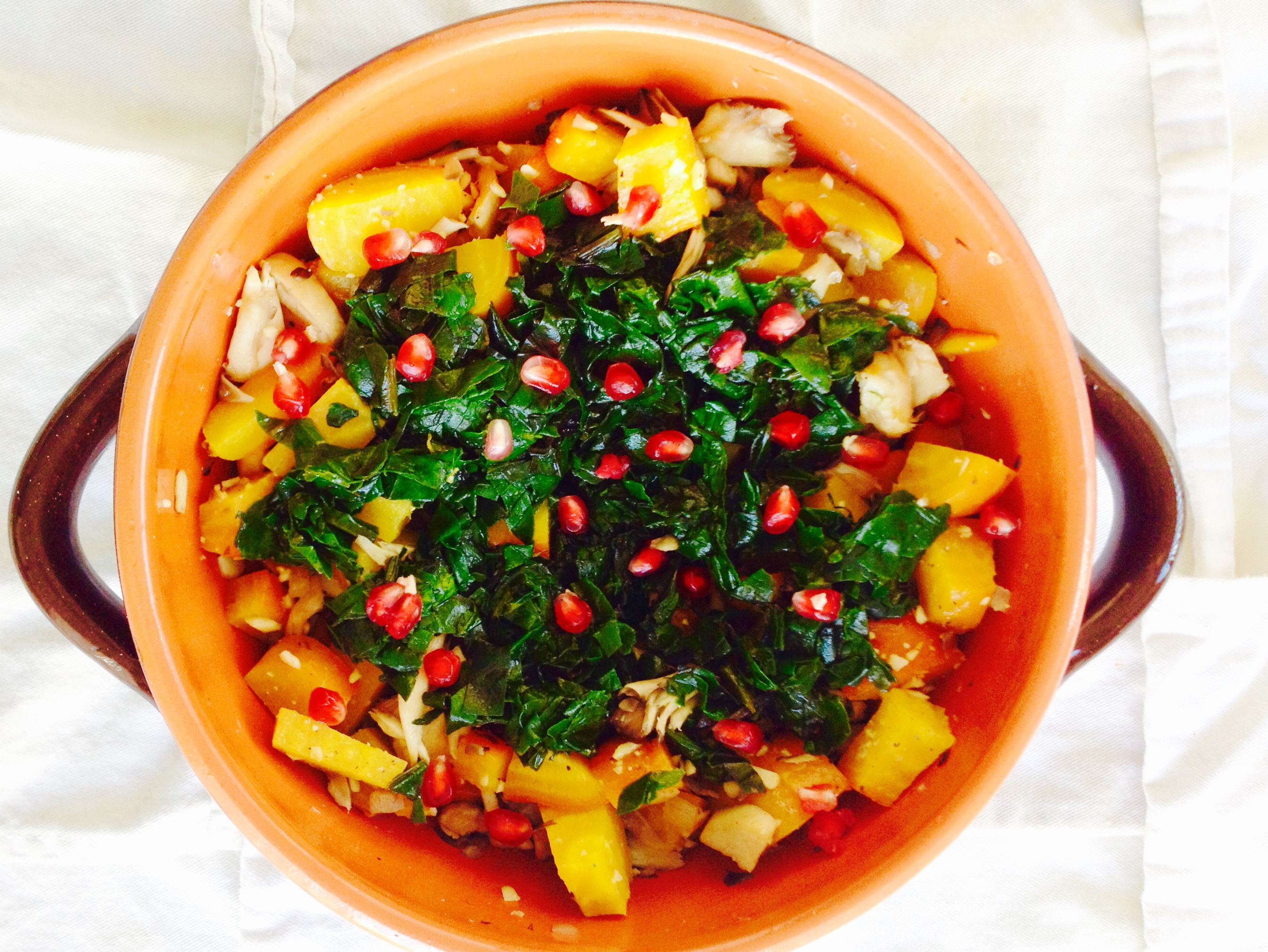
Chayei Sarah: roasted beets, mushrooms, beet greens

Chayei Sarah: roasted Golden beets, mushrooms, beet greens

The title of this week’s parsha, Chayei Sarah (the life of Sarah), is a bit misleading at it is book-ended by the deaths of Sarah and Avraham. But, it is also filled with a celebration of life. Avraham dies in old age, but only after ensuring his progeny through the marriage of his son, Isaac, to Rebecca. It is a story of the spiraling cycles of our lives and the continuation of our legacies through the generations of our families.

We continue our lives even when are family and friends pass. And, upon death, we each return to the soil that initially gave us life.  The simplest matter that we become upon death–dirt and dust–also brings us forth to the beauty, complexities and interconnectedness of life on Earth.  Deep in the ground is the source of our nourishment and life for all: water, and soil.

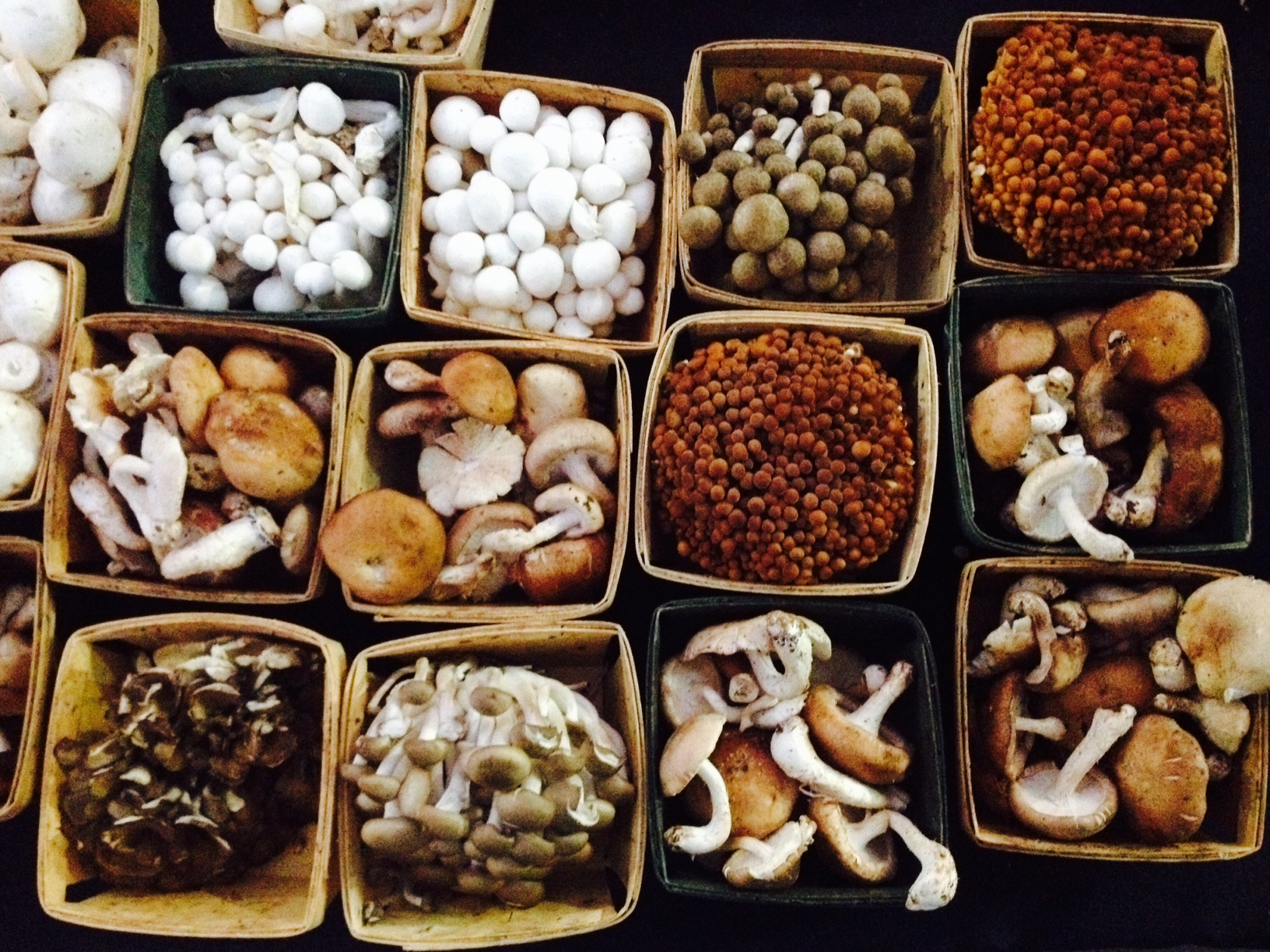
LA Funghi mushrooms, Culver City farmers market

Mushrooms. LA Funghi, Culver City farmers market

In the parsha we learn that at Avraham’s request, his servant journeyed to find a wife for Isaac, bringing ten camels with him. The camels were brought to a well where the women of the town collected water each evening. As Rabbi Shai Held notes, Rebecca offered the camels water without the servants prompting. “She is so kind that she does more than she is asked, and beyond her concern for people, she cares also for the needs of animals.”  Continue reading

Vayera: The “Other”

Vayera roasted peppers dips

Vayera roasted peppers dips

This week’s parsha, Vayera, is filled with ethical challenges:  Sodom and Gomorrah, the binding of Issac, and the departure of Hagar and Ishmael. But, at the beginning of the parsha, Sarah and Abraham welcome three unexpected strangers to their tent. They wash their guests feet, bake bread and slaughter a calf for them for dinner.

Shortly after Abraham and Sarah’s generosity to the strangers, we are brought to the horrors of Sodom and Gomorrah. The people of Sodom and Gomorrah lived in a land of material abundance but followed the ethic, “what’s mine is mine and what’s yours is yours” (Pirkei Avot). No one took care of sick, vulnerable people. As Aviva Goldbert of the Pardes Institute writes, “the people of Sodom and Gomorrah are utterly destroyed because, according to many commentators, they wouldn’t help the “other”: the poor, the hungry, the weak, the needy.”

We Americans live in a land today of great wealth. But, how do we share it? As I’ve written previously, there are 46.5 million hungry people in the US, including 12 million children and 7 million seniors. I live in Los Angeles–a city with hundreds of farms within hours of our city limit, countless urban gardens and some of the nation’s best restaurants–but there are 1.7 million hungry residents.  These are the “others” in our cities and country: food insecure Americans who go to bed hungry, not necessarily knowing when they will next eat. Continue reading

Lech Lecha: From Dark to Light

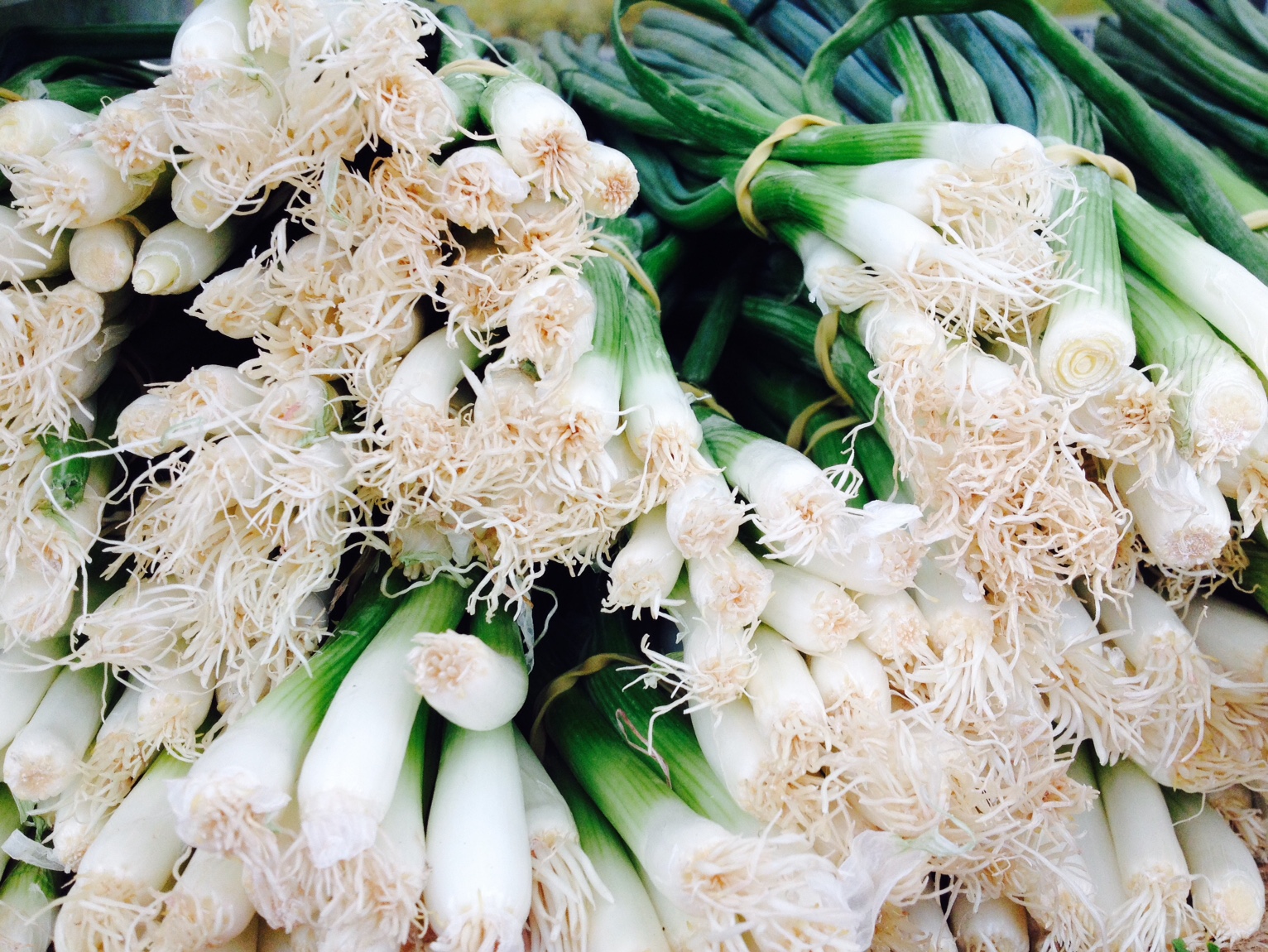
Scallions. La Cienega farmers market

Scallions. La Cienega farmers market

Lech Lecha tells the story of the birth of the Jewish people through Avraham’s prophecy.  God tells Avram, “I will bless you and make you a great nation.”  As Diane Bloomfield taught this week about Lech Lecha, “God is bringing in a radical new creation with different qualities of what it means to be a human being and the potential becoming of a Jewish nation that brings blessings into the world.”

In the parsha, Avraham is sent on a challenging journey to unknown land, despite God’s promise to protect him and Sarah. It is fraught with dangers, famine, and personal challenges. As Yael Shy wrote, the unknowingness of journeys can create unease and fear in oneself, as is true for Avraham. But, as she continued, “God is telling Abraham to stop trying to predict or figure out or gain control of what that which he is not in control.”

His journey is not about where he has been or his previous actions but where he is going and the potential for the future.  He’s a baal teshvua: someone who lives in the process of what he can become, not what he did, according to Diane Bloomfield.

Continue reading

Bereshit: Creation and Stewardship

We start again this Shabbat at the beginning with Bereshit. The universe is created out of nothingness by God. “The earth being unformed and void, with darkness over the surface of the deep and a wind from God sweeping over the water.” God creates light and dark, sky and earth, water and land, humans and all of the plants, animals insects, birds and others creatures of our planet, six days and Shabbat. The preciousness and chaos of the complex universe that God makes comes forth from separations, distinctions , enumerations and accountings. In our biosystems, and particularly our humanity, there is great diversity.

FullSizeRender_1Rabbi Shai Held of Mechon Hadar writes, “among other things, then, the biblical creation story is like a hymn to biodiversity, which is seen as unambiguously good in its own right. For the Torah, then, creation is precious in its own right.”

This story is not about dominion over the earth but  our being accountable  for stewardship of all that God created. Rabbi Held continues, “the meaning of ‘but the earth He gave over to humanity’ is that the human being is God’s steward (pakid) over the earth and everything that is on it, and she must act according to God’s word.”

Continue reading

Simchat Torah: 7 Rounds

Simchat Torah eggplant rounds

Simchat Torah rounds

We end and we begin. With the ending of the holiday of Shmini Atzeret, we begin Simchat Torah (Rejoicing of the Torah) which celebrates the completion of the year-long reading of the Torah. And, then we begin anew with a celebration of life in the story of creation in Bereshit (Genesis). The holiday is an extraordinary community celebration of dancing and singing with Torah scrolls for seven Hakafot (circles).

Simchat Torah symbolizes the cycles of our lives. As the Earth rotates, our lives rotate throughout the year; Torahs scroll cycle along their wooden spines each week; our food grows in cycles; on Simchat Torah while holding the Torah, we circle as a community; and we cycle together throughout the Jewish calendar.


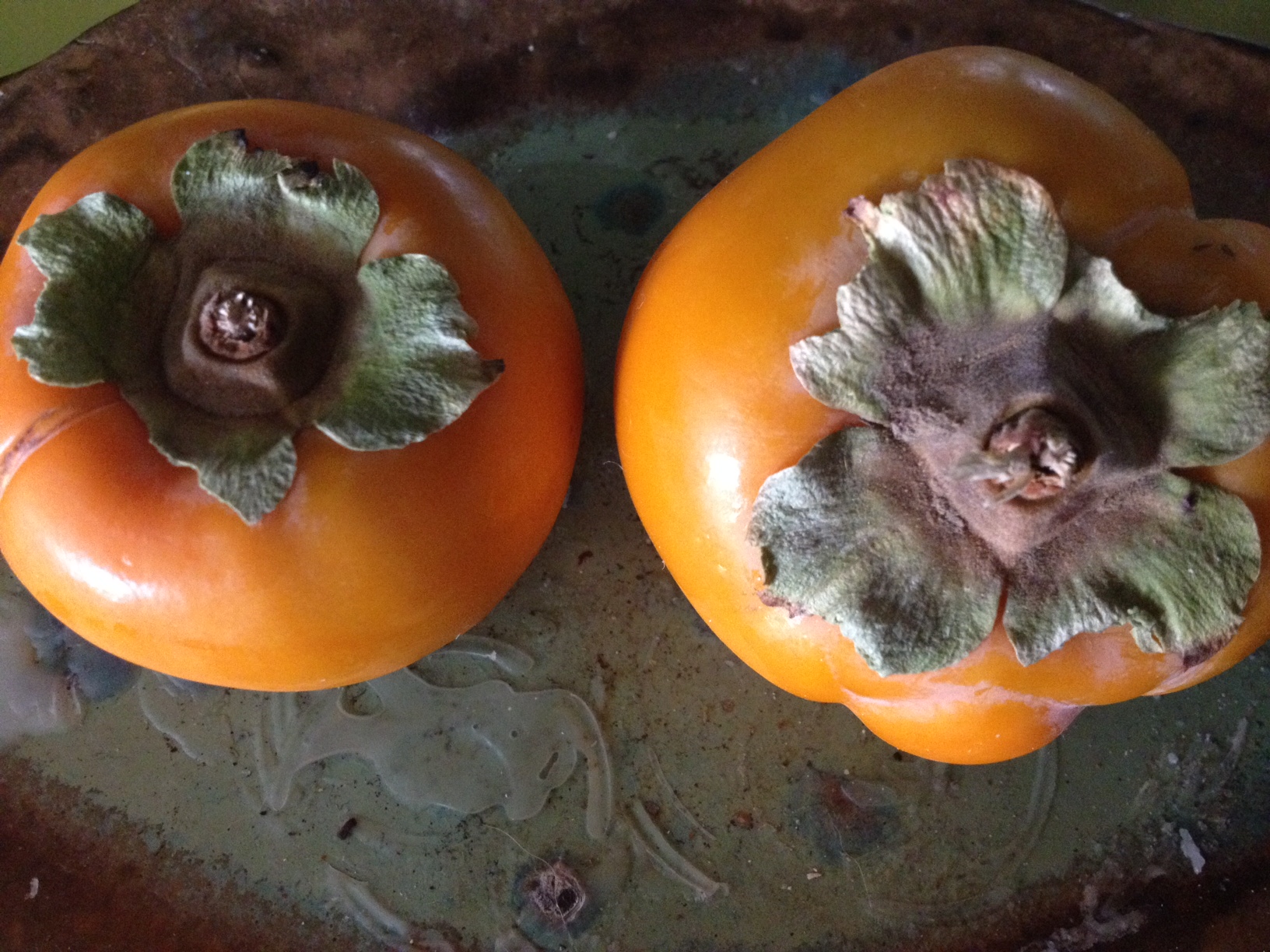
Fuyu persimmons. Plummer Park farmers market

Fuyu persimmons. Plummer Park farmers market

In the spirit of the seven Hakafot, I created a Simchat Torah recipe reflecting the cyclical nature and joy of the holiday. It’s common to eat foods that are rolled like scrolls and I would suggest that there is this option for this dish, too.  Continue reading

Shmini Atzeret: Eating in a California drought

FullSizeRender

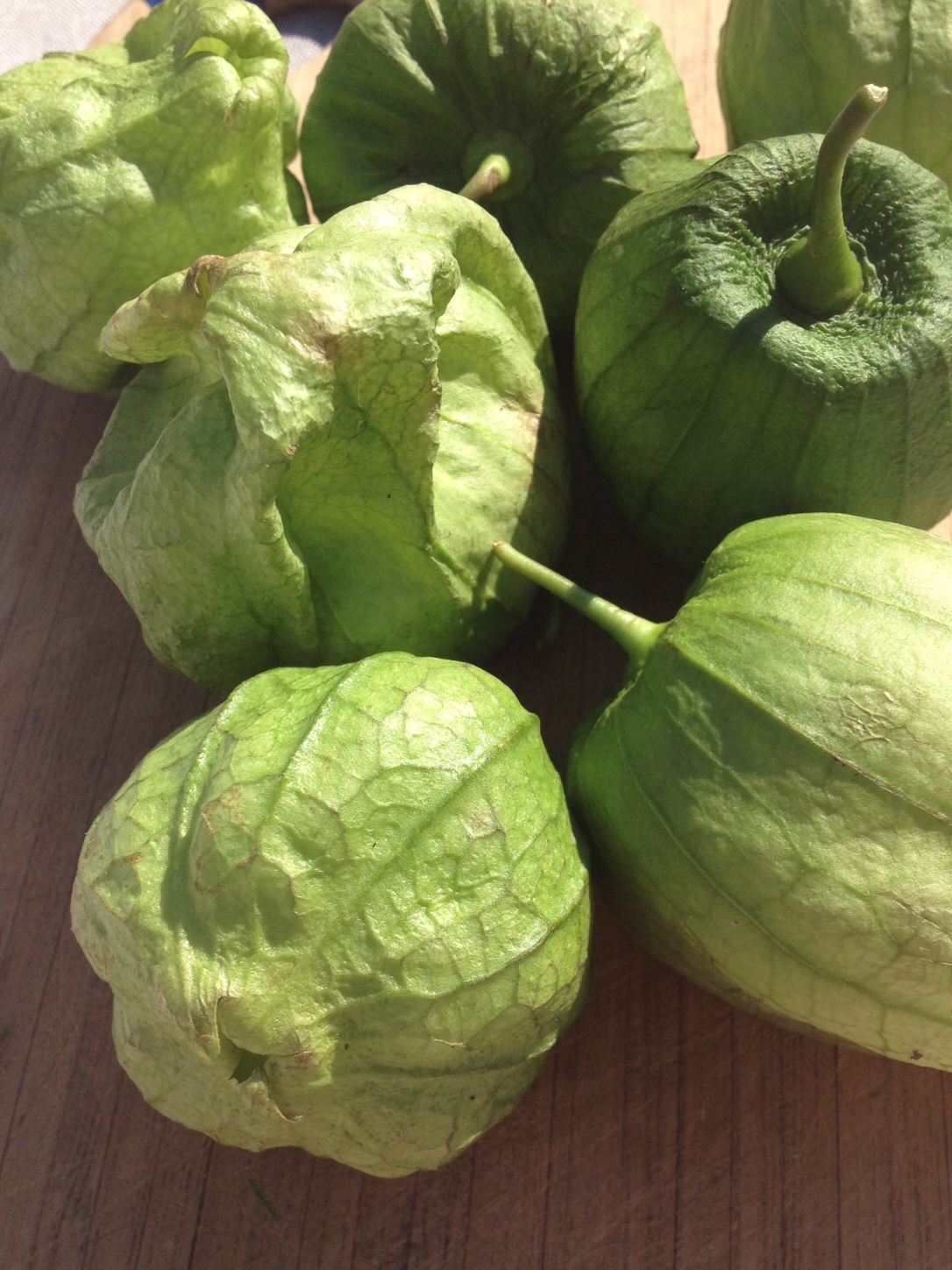
Tomatillos

I live in Southern California. The majority of my water is pumped from Northern California and other western states. It’s energy intensive, illogical and not sustainable. To add to this, California is in the worst drought in the past 500 years.  What does this mean for Californians and the rest of the nation?

A LOT!  California is America’s fruit basket and salad bowl–the state provides half of the fruit, vegetables and nuts for our country. In the process of growing all of this food, the California agriculture sector uses 80% of the state’s water. 

This is dire for state’s agriculture, which has already lost a half million acres of farmland, will cost the industry $2.2. Billion this year and 17,000 jobs. For some Californians, like hundreds of Tulare County residents (many of whom are Mexican immigrants drawn to the region for agricultural jobs) who use well water, their taps have run dry.

So, what does this have to do with Shmini Atzeret? Bookended by Sukkot and Simchat Torah  (in Israel, it is celebrated on the same day as Simchat Torah), the importance of California’s water situation is keenly attached to this holiday. This holiday concludes the harvest period and initiates the rainy season. It is on this day that we say the Tefilah HaGeshem (Prayer for Rain). The following line is added to Amidah, Masheev HaRuach U-Moreed HaGeshem (He causes the wind to blow and the rain to fall) and is said until Passover (when the rainy season concludes). While this holiday never held the gravitas or excitement of other ones for me, I’m keenly aware now of the genuine importance of it, living in this parched state. Continue reading

Sukkot, Shmita & Perennials Roast

Pomegranates. La Cienega farmers market.

Pomegranates. La Cienega farmers market.

As apples dangle from trees, pears turn to a burnt orange and pomegranates burst at their seams with plump tiny fruits, it’s a reminder that we are in Fall harvest season. After the dramatic, solemn day of Yom Kippur, we suddenly jump into the celebratory, abundant harvest festival of Sukkot.  This is the ultimate farm-to-table holiday that pre-dated the Slow Food movement by a few thousand years.

Sukkot is yet another reminder of the beautiful cyclical nature of Jewish life. From weekly cycles marked by Shabbat to agricultural cycles (the agricultural holidays of Sukkot, Pesach and Shavuot, plus the counting of the Omer), to year cycles that begin each Fall to the seven year cycles of Shmita, Jewish life is communal and circular: always expanding, growing and evolving with each cycle. Continue reading

Yom Kippur: From Fasting to Juicing

Magical Juice

The anxieties of abstaining from food and water on Yom Kippur (and enduring an expected heat wave in Los Angeles this weekend) start to dance around my head months before the actual holiday. As I try to do the important work of teshuva, I keep thinking: How am I going to prepare for and survive the fast?! How many late summer conversations do I have with my coffee drinking friends about their preferred caffeine withdrawal techniques?

Needless to say, I probably don’t need to remind anyone of the billion plus people worldwide who experience many days like this from lack of access to or fresh water each week, month, year.  Or the 46.5 million Americans who are hungry (21 million children, 7 million seniors). Unlike the daily struggles billions of people endure, this is one day for Jews without food or water.

And even though my mind admittedly will at times be distracted by a visual loop equivalent to the Food Network, Yom Kippur is really a gift. It’s an opportunity to try to move into a deep spiritual realm that is beyond our physical dimensions. Continue reading